

CLINICAL ARTICLE
What Makes PRP Hair Therapy More Effective Over Time?
Uncover why PRP hair therapy becomes more effective over time. Learn how consistent treatments boost growth, thickness, and scalp health. See the results—learn more!
What Makes PRP Hair Therapy More Effective Over Time?
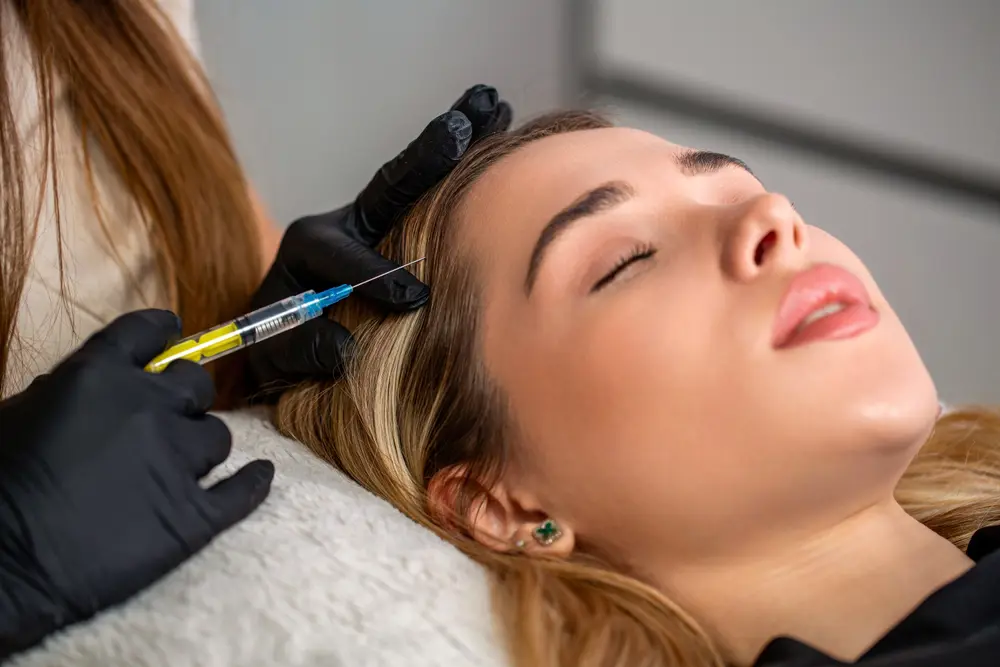
When patients ask about PRP hair therapy, the question is rarely just medical.
It’s emotional.
“I’ve already lost time. I don’t want to waste more.”
That sense of urgency is understandable. Hair loss doesn’t happen overnight, but once it becomes visible, it feels sudden. And when you’re told that PRP works “gradually,” it can sound like a polite way of saying uncertain.
So let’s be very clear — and very honest.
PRP hair therapy works best over time not because it is weak, but because it respects biology instead of fighting it. At Sinsang Plastic and Reconstructive Surgery in Gangnam, we don’t present PRP as a miracle injection. We present it as a regenerative conditioning process — one that becomes more effective as the scalp and follicles relearn how to function properly.
To understand why time is not the enemy of PRP — but its greatest strength — we need to go deeper.
PRP Is Not a “Growth Trigger.” It’s a Biological Reset
One of the biggest misunderstandings about PRP is the idea that it “forces” hair to grow.
It doesn’t.
PRP works by modifying the follicular environment — and environments change slowly.
Platelets release growth factors that influence:
- Inflammation regulation
- Blood vessel formation
- Cellular communication between follicle stem cells
- Extracellular matrix quality around follicles
Think of PRP less like turning on a switch, and more like improving soil quality. You don’t see results immediately — but once the soil improves, everything planted in it grows better and more reliably.
This is why PRP becomes more effective the longer it is applied correctly.
Hair Follicles Have Memory — and PRP Rewrites It Gradually
Hair follicles “remember” stress.
Hormonal pressure, inflammation, poor blood flow, and oxidative stress all push follicles toward:
- Shorter growth cycles
- Longer resting phases
- Progressive miniaturization
By the time thinning is visible, follicles have often been under stress for years.
PRP does not erase that history in one session.
Instead, repeated PRP treatments:
- Reduce chronic inflammatory signaling
- Improve vascular support
- Normalize communication between follicle cells
Over time, follicles shift from a defensive survival mode to a productive growth mode.
That transition is subtle — but profound.
Why Repetition Matters: The Science of Cumulative Signaling
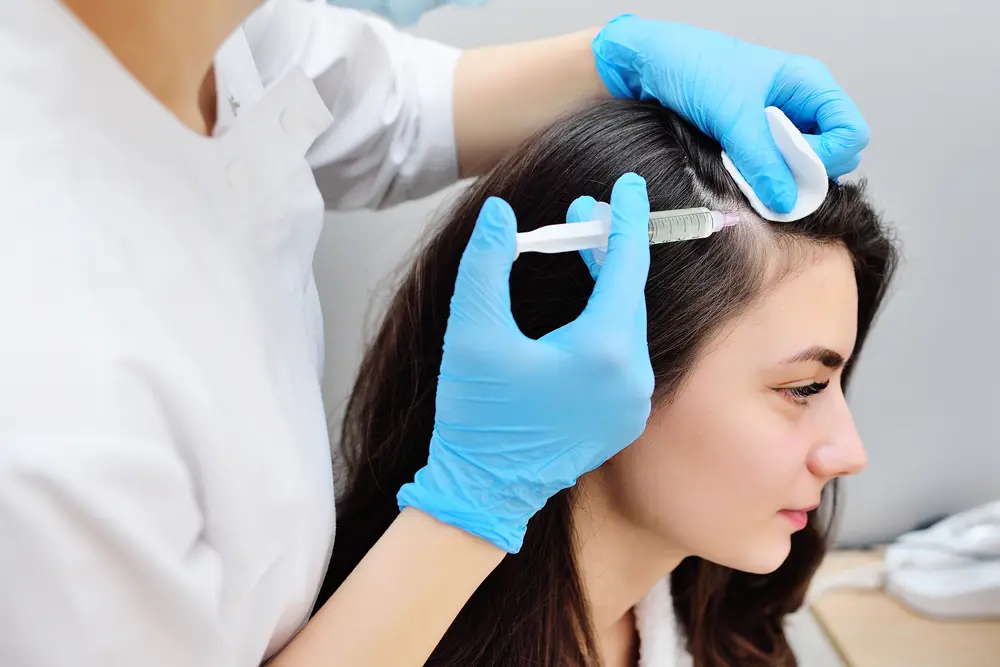
Growth Factors Don’t Work Like Drugs
Medications often work by blocking or activating a specific pathway.
PRP works by nudging multiple pathways simultaneously, including:
- Angiogenesis (new blood vessel formation)
- Fibroblast activation
- Stem cell support
- Immune modulation
Each session adds a layer of signaling. No single session dominates — they stack.
This is why patients often report:
- Session 1–2: “My shedding decreased.”
- Session 3–4: “My hair feels thicker.”
- Session 5–6: “I see density changes.”
Nothing dramatic happened at once — but everything shifted together.
Blood Supply: The Quiet Hero of Long-Term PRP Success
One of PRP’s most underestimated benefits is its effect on microcirculation.
Hair follicles are metabolically demanding. They need:
- Oxygen
- Nutrients
- Hormonal balance
PRP stimulates VEGF (vascular endothelial growth factor), which promotes the development of new, healthier capillaries around follicles.
But angiogenesis:
- Takes weeks to months
- Requires repeated stimulation
- Improves durability, not speed
This improved blood supply explains why PRP results often look more natural and stable than rapid pharmacologic regrowth.
Inflammation Control Is Where PRP Really Wins
Many patients focus on hormones when discussing hair loss — especially DHT.
But clinically, we see that micro-inflammation is just as damaging.
Chronic low-grade inflammation:
- Disrupts follicle cycling
- Weakens hair shaft quality
- Accelerates miniaturization
PRP doesn’t suppress inflammation aggressively. It rebalances it.
Over multiple sessions:
- The scalp becomes less reactive
- Itching and tenderness reduce
- Follicles spend more time in growth phases
This is why PRP often improves hair retention even before regrowth becomes obvious.
Keeping hair is just as important as growing it.
PRP and the Hair Growth Cycle: Timing Is Everything
Hair grows in cycles, not continuously.
At any given moment:
- ~85–90% of follicles are in anagen (growth)
- The rest are resting or shedding
PRP does not “wake up” all follicles at once.
Instead, repeated sessions:
- Intercept follicles as they re-enter growth phases
- Support healthier transitions
- Reduce the number of follicles that remain dormant
This is one reason maintenance treatments are not optional — they ensure PRP reaches follicles when they are biologically receptive.
Why Technique Determines Long-Term Results?
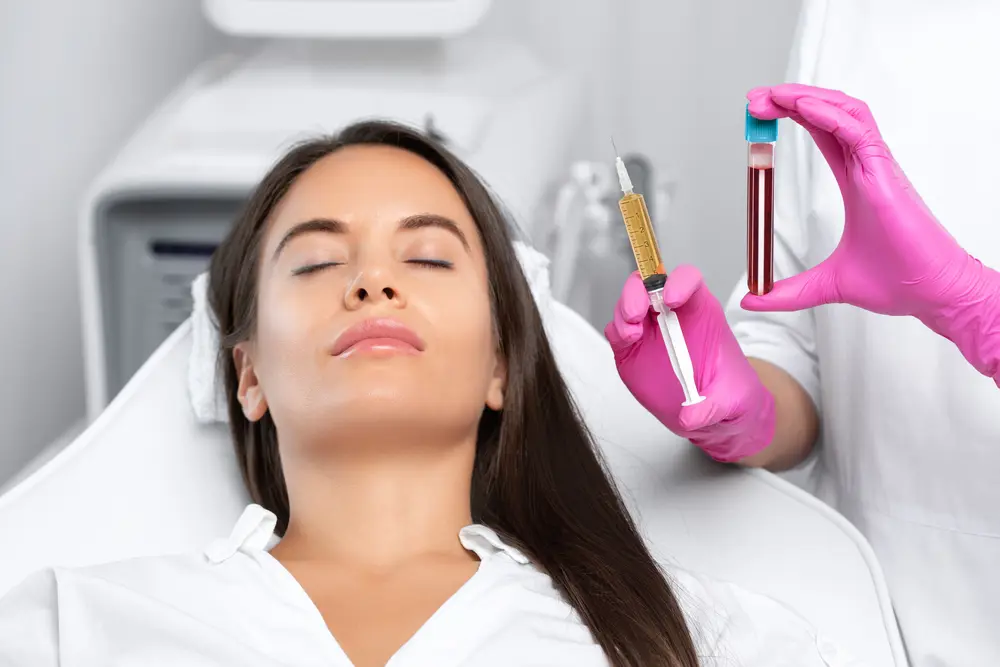
Not all PRP treatments age equally well.
Over time, poor technique becomes obvious.
At Sinsang, PRP effectiveness depends on:
- Proper platelet concentration (too weak = ineffective, too strong = inflammatory)
- Minimal red blood cell contamination
- Fresh preparation
- Correct injection depth around follicular bulge zones
- Even distribution without excessive trauma
Inconsistent preparation leads to inconsistent signaling — and inconsistent results.
Precision compounds benefits.
The Scalp Environment: PRP Needs a Supportive Ecosystem
PRP does not work in isolation.
Its long-term success improves dramatically when:
- Sebum imbalance is controlled
- Scalp microbiome is healthy
- Nutritional deficiencies are addressed
- Hormonal factors are acknowledged
This is why PRP performs best under surgeon-led planning, not as a standalone cosmetic service.
When the environment improves, follicles respond more consistently — and for longer.
What Patients Usually Notice Over Time (Realistic Timeline)?
Early Phase (1–2 months)
- Reduced shedding
- Calmer scalp
- Improved hair texture
Consolidation Phase (3–6 months)
- Thicker existing hairs
- Improved density perception
- Less progression of thinning
Maturation Phase (6–12 months)
- More stable hair cycles
- Better hair caliber
- Sustained retention
The most satisfied patients are those who understand that PRP builds resilience, not drama.
PRP as Part of a Long-Term Hair Strategy
At Sinsang Plastic and Reconstructive Surgery, PRP is rarely used in isolation.
It is often integrated to:
- Stabilize early hair loss
- Enhance medical therapy tolerance
- Improve post–hair transplant healing
- Serve as regenerative maintenance
PRP’s value increases when it is placed correctly within a long-term plan.
A Final, Honest Perspective
PRP hair therapy doesn’t succeed because it’s fast.
It succeeds because it’s biologically respectful.
Over time, it:
- Improves scalp health
- Supports follicle survival
- Strengthens growth cycles
- Slows loss in a sustainable way
If you’re considering PRP, the most important question isn’t:
“How soon will I see hair?”
It’s:
“Am I willing to support my follicles the way biology requires?”
When PRP is applied patiently, precisely, and consistently, its effectiveness doesn’t plateau — it deepens.
And in hair restoration, depth always outlasts speed.
Clinical Guidance & Recovery Considerations
All surgical and non-surgical treatments carry potential risks such as temporary swelling, bruising, asymmetry, or infection depending on individual anatomy. Detailed indications and personalized recovery expectations are confirmed during in-person ultrasonic evaluation with a Sinsang board-certified specialist.
Patient Concierge
Gangnam Station / Sinsa Area · 150 Dosan-daero 5F–6F, Seoul
Mon–Thu 10:00–19:00 · Fri 10:00–21:00 · Sat 10:00–17:00
Online Inquiry Form →WhatsApp (+1 201-940-3238)LINE (@853akazy)CONTINUE EXPLORING
More Medical Insights

Rising Demand for Double Chin Revision Surgery: Korean Market Price Trends
Rising Demand for Double Chin Revision Surgery: Korean Market Price Trends
Explore →

What is fat grafting - Procedure, Uses, Types, Benefits, and Risks
What is fat grafting - Procedure, Uses, Types, Benefits, and Risks
Explore →

Why 9,000 Global Patients Chose Seoul for Specialized Neck Contouring Surgery
Why 9,000 Global Patients Chose Seoul for Specialized Neck Contouring Surgery
Explore →
INTERNATIONAL CONCIERGE · GANGNAM, SEOUL
Begin Your Personalized Surgical Plan With Sinsang Specialists
Share your goals online or connect directly via our official WhatsApp or LINE concierge for pre-travel assessment and scheduling.