
CLINICAL ARTICLE
Scar Treatments That Work—Before & After Photos Included
Discover scar treatments that truly work, with real before & after photos. Explore proven solutions for clearer skin. See the results—learn more now!
Scar Treatments That Truly Work — Before & After Photos Included
Most patients who walk into our clinic don’t start the conversation with, “I want perfect skin.”
They usually say something quieter, more vulnerable:
“I just want to stop noticing this scar every day.”
Or, “I hope people look at me, not at this mark.”
To be honest, scars carry stories — injury, surgery, acne, even moments we’d rather forget. But what many patients don’t realize is how responsive scars actually are to modern treatment, especially when we combine regenerative medicine with precise, layered techniques.
Below, I’ll break down the scar treatments that consistently work in real clinical practice, explain why some scars respond better than others, and show examples of typical before-and-after results similar to what patients achieve at our center.
Why Scars Look the Way They Do — The Part Most People Don’t Hear About
A scar isn’t just a “mark.”
It’s the skin’s rushed attempt at emergency repair.
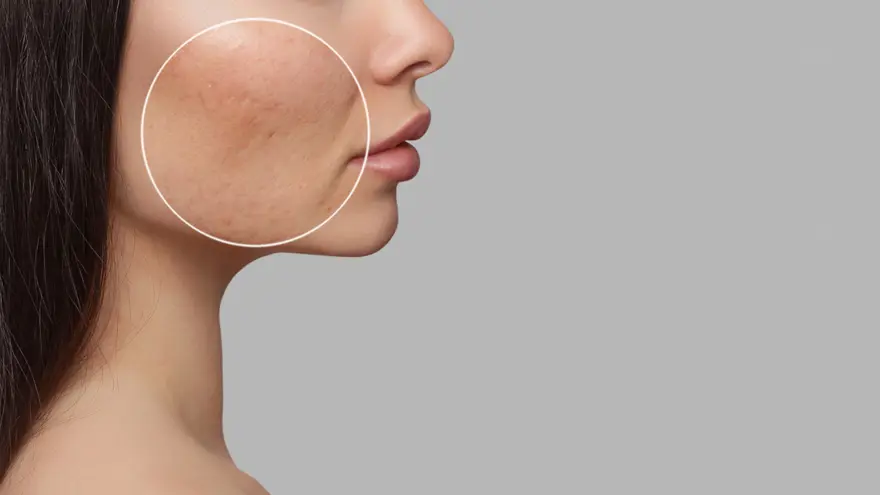
When the deeper dermal structure is disrupted, collagen fibers rebuild rapidly — but often in chaotic, disorganized bundles. That’s why the scar may appear raised, sunken, or discolored.
In Korea, especially in Gangnam where expectations are high, patients often worry about even small scars becoming noticeable under bright urban lighting. A small irregularity on the cheek, for example, can cast a shadow that exaggerates its appearance.
The good news? With today’s diagnostic tools — especially high-frequency ultrasound — we can actually see:
- how thick the scar tissue is
- whether deep fibrous bands are tethering the skin
- whether there is excess or deficient collagen
- how vascular the tissue is (important for lasers)
This changes everything.
Scars treated blindly often improve only partially.
Scars treated with structural insight improve dramatically.
1. Laser Resurfacing for Texture & Pigment — When the Surface Is the Main Problem
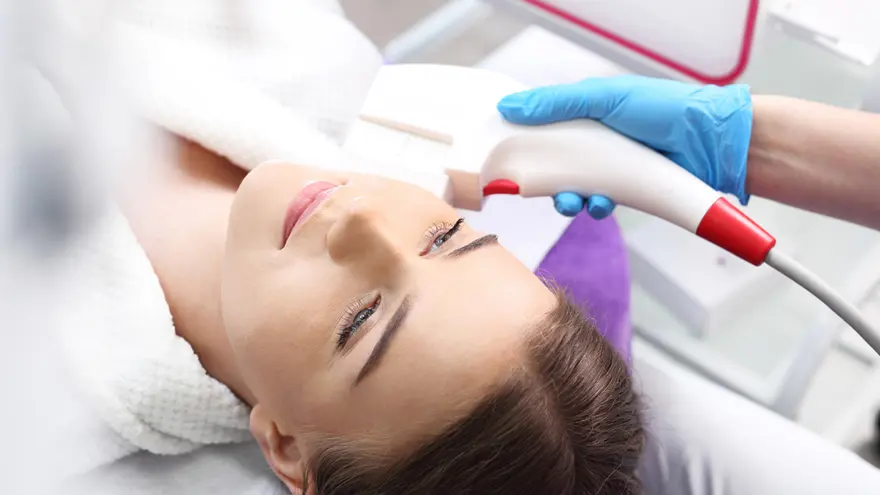
Laser therapy works when the main issues are texture irregularity or pigmentation.
At Sinsang, we commonly use fractional CO₂ or fractional Er:YAG lasers, adjusting depth with ultrasonic measurements. Many patients are surprised that the effectiveness is not about “strong lasers,” but about controlled micro-injury that forces collagen to rebuild in a more organized, harmonious pattern.
Why It Works?
- breaks down rigid collagen
- stimulates controlled regeneration
- improves surface smoothness
- evens out color differences
Who It Helps Most?
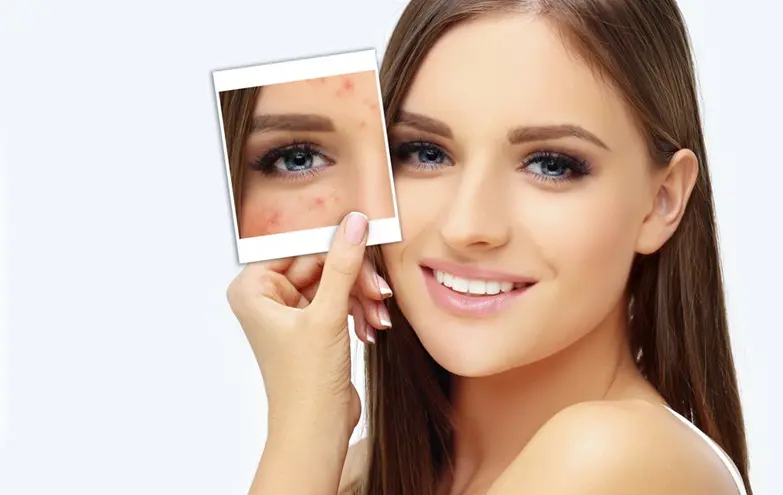
- post-acne scars (rolling, shallow boxcar)
- trauma scars with rough texture
- pigmentation-heavy scars (brown or red)
Laser alone, however, rarely fixes deeper indentations.
For that, we move to step two.
2. Subcision for Depressed Scars — Releasing the “Anchors” Under the Skin
Some scars remain sunken no matter how many lasers are applied.
The reason is simple — the scar is physically tethered to deeper tissue. Think of it like a thread pulling the skin downward from the inside.
Subcision involves using a fine needle to release these bands.
Why Surgeons Prefer Subcision First?
A laser cannot cut fibrotic bands.
Ultrasound-based mapping helps us identify exactly where the tethering is, so we release only what is necessary — avoiding unnecessary trauma.
Best Candidates:
- tethered acne scars
- depressed surgical scars
- burns with puckering effect
In many cases, combining subcision with regenerative fillers (next section) produces results that patients describe as “finally look normal again.”
3. Regenerative Fillers & Stem Cell Therapy — Smoothing and Strengthening From Within
This is where our clinic’s identity shines.
With an in-house stem cell laboratory and regenerative specialists, we frequently combine:
- Autologous fat grafting (microfat / nanofat)-PRP or PRF injections-Stem cell–enriched fat
These therapies don’t just fill — they heal.
Why Regeneration Matters?
Scar tissue is biologically “stiff” and poorly vascularized. Regenerative cells soften the matrix, improve circulation, and help restore normal skin behavior.
Patients often tell us the treated area no longer feels “tight” or “stuck.” That change in sensation is a sign of true tissue recovery, not just surface improvement.
Ideal For
- deep acne scars
- depressed surgical scars
- contour deformities after trauma
- long-standing scars that resisted previous treatments
4. Surgical Scar Revision — When the Line Itself Needs Redesigning
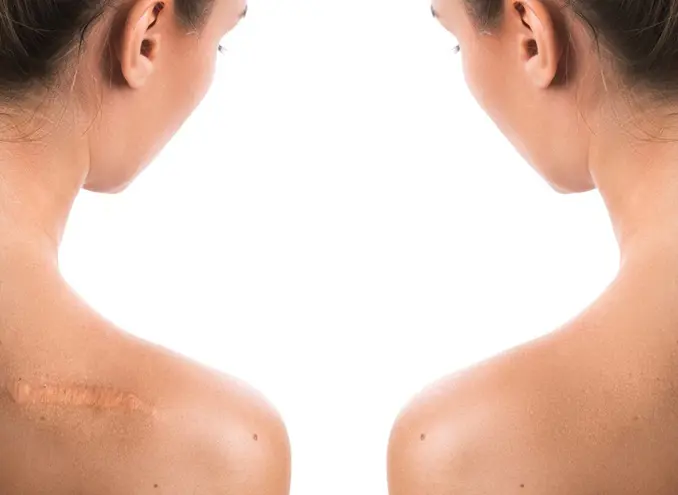
Sometimes, no matter how much you laser or regenerate, the architecture of the scar is fundamentally flawed — too wide, badly aligned with skin tension lines, or healed under tension.
Scar revision involves excising the scar and closing it with meticulous technique, often using Z-plasty or geometric broken-line closure.
Why We Recommend It?
- improves function when scars restrict movement
- aligns the scar with natural folds for better blending
- reduces width and irregular edges
This is a technique-sensitive procedure.
The difference between a revision done by a general practitioner and a plastic surgeon is often night and day — especially in areas like the face.
5. Keloid & Hypertrophic Scar Management — A Different Biological Story
These scars don’t just heal incorrectly — they overheal.
Treating them requires patience, layered planning, and careful follow-up.
Our typical approach includes:
- intralesional steroid injections
- 5-FU injections (when needed)
- laser vascular therapy
- silicone gel and pressure therapy
- regenerative methods for tissue normalization
Keloids, especially, have a tendency to recur.
This is where long-term care and a surgeon-led plan truly matter.
What Our Patients Often Ask — And What We Tell Them Honestly
“Can any scar be improved?”
Almost always, yes.
Can it be made invisible? Not always. The goal is natural blending — where the eye no longer catches on the mark.
“How long does healing take?”
Collagen remodels slowly. The full benefit of treatments such as lasers or regenerative injections can take 3–6 months to appear — a truth many clinics gloss over.
“Will it look natural?”
In Gangnam, this question is practically a cultural expectation.
Our philosophy: a successful scar treatment is one that no one notices, even under harsh lighting.
How We Approach Scar Treatment at Sinsang?
Every scar is examined like a unique architectural problem.
We use:
- High-frequency ultrasound to assess depth
- 3D imaging for contour irregularities
- Layer-by-layer treatment planning (surface → mid-dermis → deep tethering)
- Regenerative medicine to strengthen healing
- Surgical expertise for cases needing structural correction
Because scars are multidimensional, treatments must be too.
To be completely transparent, the most satisfying results come from combined therapies, not one-off treatments. We see more improvement in six weeks of structured, layered care than in years of scattered, single-modality attempts.
Before You Seek Treatment — A Small but Important Reminder
If you’re reading this because a scar has been bothering you for years, please know this: you are not “vain” for wanting improvement. Scars sit in visible places; they carry emotional weight. Wanting relief is human.
And with modern regenerative and surgical methods, relief is genuinely possible.
If You're Considering Scar Treatment
If any of these examples reminded you of your own situation — acne scars, trauma scars, surgical marks, or long-standing texture issues — consider visiting a clinic that uses advanced diagnostics and surgeon-led planning.
At Sinsang Plastic and Reconstructive Surgery in Gangnam, our team specializes in precision-focused scar improvement grounded in regenerative science and high-level surgical technique.
You’re welcome to schedule a consultation, ask questions, or simply let us examine the scar and explain what is realistically possible.
Sometimes a few minutes of professional evaluation changes everything.
Clinical Guidance & Recovery Considerations
All surgical and non-surgical treatments carry potential risks such as temporary swelling, bruising, asymmetry, or infection depending on individual anatomy. Detailed indications and personalized recovery expectations are confirmed during in-person ultrasonic evaluation with a Sinsang board-certified specialist.
Patient Concierge
Gangnam Station / Sinsa Area · 150 Dosan-daero 5F–6F, Seoul
Mon–Thu 10:00–19:00 · Fri 10:00–21:00 · Sat 10:00–17:00
Online Inquiry Form →WhatsApp (+1 201-940-3238)LINE (@853akazy)CONTINUE EXPLORING
More Medical Insights

Rising Demand for Double Chin Revision Surgery: Korean Market Price Trends
Rising Demand for Double Chin Revision Surgery: Korean Market Price Trends
Explore →

What is fat grafting - Procedure, Uses, Types, Benefits, and Risks
What is fat grafting - Procedure, Uses, Types, Benefits, and Risks
Explore →

Why 9,000 Global Patients Chose Seoul for Specialized Neck Contouring Surgery
Why 9,000 Global Patients Chose Seoul for Specialized Neck Contouring Surgery
Explore →
INTERNATIONAL CONCIERGE · GANGNAM, SEOUL
Begin Your Personalized Surgical Plan With Sinsang Specialists
Share your goals online or connect directly via our official WhatsApp or LINE concierge for pre-travel assessment and scheduling.