

CLINICAL ARTICLE
What Causes Double Chin in Slim People? And How to Fix It
Learn what causes a double chin in slim people and explore effective treatments to define your jawline. Get expert tips and solutions—read more now!
What Causes a Double Chin in Slim People? And How to Fix It

One of the most confusing — and frustrating — concerns we hear in consultation goes something like this:
“I’m slim. I work out. I watch my diet.
So why do I still have a double chin?”
For many patients, especially in their 20s to 40s, a double chin feels unfair. It doesn’t match their body. It doesn’t respond to weight loss. And it often becomes more noticeable in photos or video calls than in the mirror.
To be honest, this is one of the most misunderstood facial concerns — both by patients and by clinics that oversimplify the cause.
At Sinsang Plastic and Reconstructive Surgery, we see slim patients with double chins every day. And the truth is clear:
A double chin is rarely about weight alone.
In slim individuals, it is almost always structural.
Let’s explain why it happens — and what actually works to correct it.
First, Let’s Redefine “Double Chin”
A “double chin” is not a diagnosis. It’s a visual description.
What patients call a double chin can be caused by different underlying issues, including:
- Localized submental fat
- Loose or short chin support
- Weak jawline definition
- Low hyoid bone position
- Skin laxity
- Platysma muscle behavior
In slim people, it is often not excess fat, but rather how tissues are arranged and supported.
Treating the wrong cause leads to disappointing results — which is why proper evaluation matters more than the treatment itself.
1. Genetic Fat Distribution (Even in Slim Bodies)
Some people are genetically predisposed to store fat under the chin, regardless of overall body fat percentage.
This fat is often:
- Resistant to diet and exercise
- Localized only to the submental area
- Present from a young age
In these cases, patients may be slim everywhere else, but still see fullness under the chin.
The key detail many don’t realize is that submental fat behaves differently from abdominal or thigh fat. Losing weight may reduce it slightly — but rarely eliminates it completely.
When this is the primary cause, targeted treatment can be very effective.
2. A Small or Retruded Chin (Chin Projection Matters)
This is one of the most overlooked causes of a double chin in slim patients.
If the chin is short or set back, the soft tissue beneath it has nowhere to stretch forward. As a result, it folds downward, creating the appearance of fullness — even when there is minimal fat.
From the side, this often looks like:
- A weak chin profile
- Poor transition between chin and neck
- A shadow or crease under the chin
Importantly, the problem is not excess tissue — it’s lack of skeletal support.
In these patients, removing fat alone can actually worsen balance.
3. Jawline and Mandibular Structure
Closely related to chin projection is the shape of the jawline itself.
A narrow or downward-sloping mandible can reduce the natural tension that keeps the neck area tight. Even slim patients may develop softness under the chin because the jawline does not provide a strong framework.
This is especially common in:
- Patients with V-line facial structure
- Those with naturally small lower faces
- Individuals with asymmetric jaw development
Again, this is a structural issue, not a weight issue.
4. Low Hyoid Bone Position (Anatomy You Can’t Exercise)
The hyoid bone plays a major role in neck contour, but most patients have never heard of it.
It sits beneath the jaw and supports the tongue and neck muscles. If it sits lower than average — which is genetically determined — the neck angle appears blunter, and a double chin becomes more visible.
This is why:
- Neck exercises rarely help
- Even very thin patients may lack a sharp neck contour
This is not something skincare, dieting, or massage can change.
5. Skin Elasticity and Early Laxity
In some slim patients, particularly those in their late 30s or 40s, the issue is not fat — it’s skin quality.
Thin skin with reduced elasticity can drape more easily under the chin, creating a fold even without volume.
Factors that accelerate this include:
- Genetics
- Sun exposure
- Smoking
- Rapid weight changes
In these cases, fat removal alone may worsen looseness if skin support is not addressed.
Why Many “Non-Surgical” Fixes Disappoint Slim Patients?

Slim patients are often told to try:
- Fat-dissolving injections
- Tightening devices
- Chin exercises
- Massage or lymphatic treatments
While these can help some people, they often fail in slim patients because:
- There may be very little fat to dissolve
- The issue may be bone or muscle-related
- Skin laxity may require structural support
This is why patients often say,
“I tried everything — nothing changed.”
They weren’t failing. The diagnosis was incomplete.
How We Actually Fix Double Chin in Slim Patients?
There is no single solution. The correct approach depends entirely on what is causing the appearance.
At Sinsang Plastic and Reconstructive Surgery, we start by asking:
Is this a fat problem, a support problem, a skin problem — or a combination?
1. Precision Submental Liposuction (When Fat Is the Cause)
When localized fat is the primary issue, conservative, surgeon-performed liposuction can dramatically improve the neck contour.
Key points many clinics don’t emphasize:
- Over-removal creates irregularity and premature aging
- Fat must be removed evenly and conservatively
- Skin quality must be assessed beforehand
In slim patients, subtlety is everything.
2. Chin Augmentation or Structural Support
When a weak chin is contributing to the double chin appearance, improving projection can be transformative.
This may involve:
- Chin implant
- Structural fat grafting
- Bone-based advancement (in selected cases)
Often, improving chin support reduces the double chin without aggressive fat removal.
This is one of the most powerful — and underutilized — solutions.
3. Neck Contouring and Platysma Management
In patients where muscle behavior or early laxity plays a role, addressing the platysma muscle can refine the neck-chin angle.
This is especially relevant for:
- Patients with visible neck bands when talking
- Those with good skin but poor contour
This approach requires surgical expertise and careful planning.
4. Regenerative Support for Skin Quality
When skin elasticity is part of the problem, regenerative treatments can support healing and long-term results.
These may include:
- Fat-derived regenerative therapy
- Stem cell–rich fat grafting
- Targeted skin-support protocols
At Sinsang, regenerative medicine is used to enhance contouring results, not replace structural correction.
Why Slim Patients Need Surgeon-Led Planning?
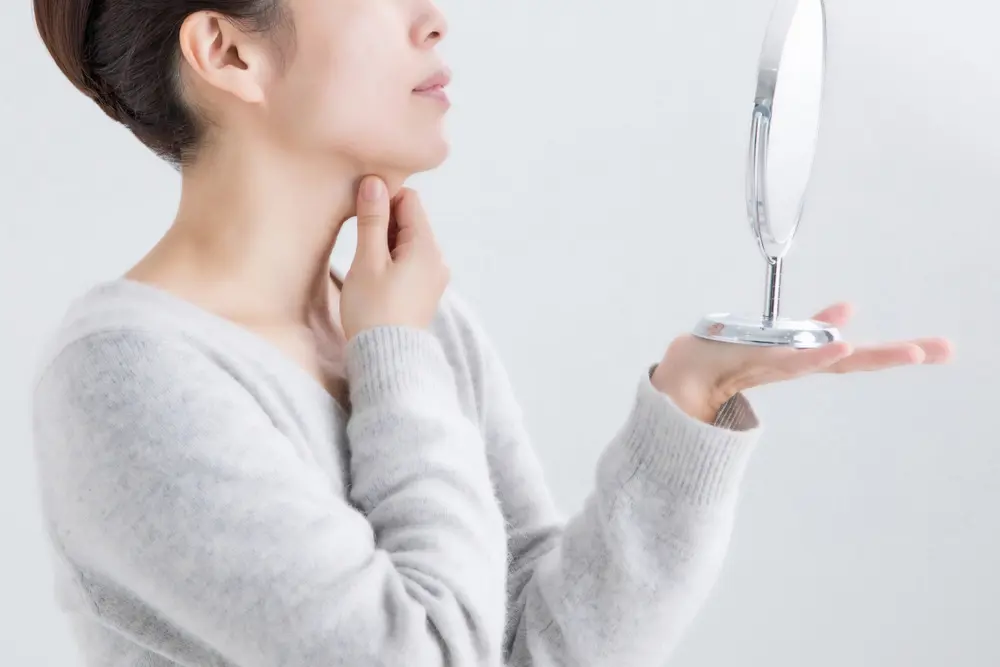
Double chin treatment is one of the areas where over-simplification causes the most regret.
Slim patients are particularly vulnerable to:
- Over-treatment
- Hollowing
- Imbalance between face and neck
This is why proper evaluation — including profile analysis and sometimes ultrasonic imaging — is essential.
At Sinsang Plastic and Reconstructive Surgery:
- All planning is surgeon-led
- Led by Dr. Young Jae Lee, former clinical professor
- Supported by a team of six board-certified plastic surgeons
- Focused on harmony between face, chin, and neck — not isolated fixes
A Final Thought
If you’re slim and still struggling with a double chin, it doesn’t mean you’re doing something wrong.
It means your anatomy deserves a more thoughtful explanation.
A double chin in slim people is rarely about excess —
it’s about structure, support, and proportion.
Once those are understood, solutions become clearer, safer, and far more satisfying.
If these concerns sound familiar, a consultation with a surgeon experienced in facial and neck anatomy can help you understand not just what can be done — but what should be done for you.
At Sinsang Plastic and Reconstructive Surgery, we believe the best contouring results come from precision, restraint, and respect for your natural structure.
Clinical Guidance & Recovery Considerations
All surgical and non-surgical treatments carry potential risks such as temporary swelling, bruising, asymmetry, or infection depending on individual anatomy. Detailed indications and personalized recovery expectations are confirmed during in-person ultrasonic evaluation with a Sinsang board-certified specialist.
Patient Concierge
Gangnam Station / Sinsa Area · 150 Dosan-daero 5F–6F, Seoul
Mon–Thu 10:00–19:00 · Fri 10:00–21:00 · Sat 10:00–17:00
Online Inquiry Form →WhatsApp (+1 201-940-3238)LINE (@853akazy)CONTINUE EXPLORING
More Medical Insights

Rising Demand for Double Chin Revision Surgery: Korean Market Price Trends
Rising Demand for Double Chin Revision Surgery: Korean Market Price Trends
Explore →

What is fat grafting - Procedure, Uses, Types, Benefits, and Risks
What is fat grafting - Procedure, Uses, Types, Benefits, and Risks
Explore →

Why 9,000 Global Patients Chose Seoul for Specialized Neck Contouring Surgery
Why 9,000 Global Patients Chose Seoul for Specialized Neck Contouring Surgery
Explore →
INTERNATIONAL CONCIERGE · GANGNAM, SEOUL
Begin Your Personalized Surgical Plan With Sinsang Specialists
Share your goals online or connect directly via our official WhatsApp or LINE concierge for pre-travel assessment and scheduling.