

CLINICAL ARTICLE
Top Signs You Need a Hair Restoration Consultation
Discover the top signs you need a hair restoration consultation. Spot early hair loss and explore effective treatment options. Book your consultation today!
Top Signs You Need a Hair Restoration Consultation

There’s a moment many patients remember vividly — that first realization that their hair is not behaving the way it used to. Sometimes it’s subtle, like noticing more scalp under bright department-store lighting in Gangnam Station. Other times it’s dramatic, like finding a concerning amount of hair in the shower drain.
People often try to ignore it at first.
They tell themselves it’s stress, or seasonal shedding, or “just a bad month.”
And to be honest, that’s completely normal — hair carries an emotional weight that few other aesthetic concerns do.
But here’s the truth we gently explain during consultations:
The earlier you understand what’s causing your hair changes, the more options you have — and the better your long-term outcome will be.
Hair restoration isn’t only about transplant surgery. It’s diagnostics, scalp biology, regenerative therapy, and pattern prediction. At Sinsang, where much of our practice focuses on regenerative science, we see hair restoration as an extension of cell health, vascular supply, and long-term tissue strategy.
So how do you know it’s time to see a specialist?
Here are the signs that matter — based on real clinical experience and the subtle patterns surgeons watch for before hair loss becomes irreversible.
1. You Notice Widening, Not Just Thinning
A common misconception is that hair loss always begins at the temples.
But many patients — especially women and men with diffuse thinning patterns — first experience widening of the central part line.
What many don’t realize is that widening indicates miniaturization of hair follicles, not simple shedding. Miniaturization is a progressive biological process in which each new hair grows thinner and shorter than the last.
Once this begins, no amount of “strengthening shampoos” will stop it.
A surgeon evaluates:
- follicular diameter variations
- scalp visibility under directional light
- vascular supply to the thinning zone
- inflammatory markers or micro-scarring
Widening is early-stage enough that regenerative treatments often work extremely well — but only if you intervene before the follicles shut down entirely.
2. Your Hairline Is Becoming “See-Through” Under Light
One of the most common things people notice — especially in high-definition selfie culture — is a translucent hairline, where the front hairs lose density and appear uneven.
This often signals early male or female pattern hair loss.
From a surgical perspective, we evaluate:
- how the micro-edges of the hairline are shifting
- whether recession follows a predictable androgenic pattern
- the thickness of miniaturized hairs (terminal vs. vellus transition)
- whether regenerative treatments can stabilize the area
You may not “see” recession yet, but under magnification, the story is already clear.
3. You’re Shedding More Than 100–150 Hairs Daily — for Weeks
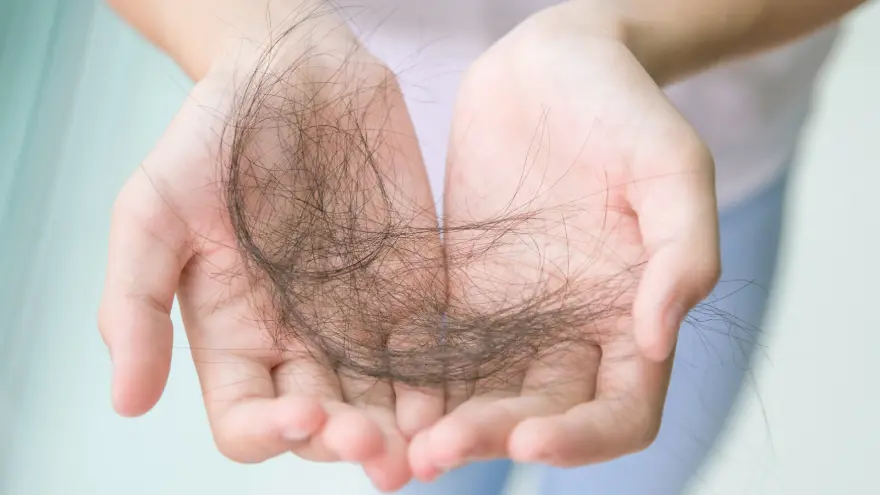
Shedding alone doesn't always indicate permanent loss. Korea’s climate, stress, and changing seasons all contribute to temporary shedding spikes.
But here’s the nuance:
It’s the duration, not the amount, that matters.
If shedding continues for more than 6–8 weeks, especially with a drop in overall density, this could be telogen effluvium on top of early androgenic alopecia — a combination we see frequently in busy professionals in Seoul.
A hair restoration consultation helps distinguish stress-related shedding from pattern loss, a distinction that determines the entire treatment plan.
4. You See More Scalp When Your Hair Is Wet or Pulled Back
Many patients first recognize thinning when they tie their hair for exercise or step out of the shower.
Why this matters medically:
Early loss reveals itself most clearly when hair is wet because water collapses the natural volume created by each strand. Surgeons evaluate these “revealed densities” to understand early follicle weakening that may not yet be obvious when the hair is dry.
If you notice:
- increased scalp shine
- reduced density at the crown
- difficulty creating your usual hairstyle
…it’s time for diagnostic imaging.
At Sinsang, we use dermoscopic scalp imaging to measure hair thickness and follicle units — similar to how we use ultrasound to analyze facial fat compartments.
5. Your Ponytail Diameter Has Decreased
This is especially common among women in their 20s–40s.
A patient will say something like:
“I didn’t notice thinning… but my ponytail feels smaller.”
That decrease reflects global density reduction, not just localized recession. Even a 20–30% reduction in volume can change the overall silhouette of the face, making features appear harsher or less balanced.
Hair is part of facial framing — something we think about deeply in facial aesthetic surgery. A thinning ponytail is your scalp asking for an evaluation before irreversible loss begins.
6. You Have a Family History of Hair Loss — and Early Signs Are Appearing
Genetics doesn’t guarantee hair loss, but it shapes timing, pattern, and rate.
If you notice even mild thinning and your parents or siblings experienced hair loss, the earlier you begin prevention, the more hair you save — literally.
To be honest, the biggest regret we hear is:
“I wish I came two years earlier.”
Hair restoration is 70% preservation and only 30% replacement.
We assess:
- your genetic pattern
- your risk map based on early miniaturization
- how aggressively the loss may progress
- whether regenerative therapy or oral medications can stabilize it
7. You’re Relying on Temporary Volume Products More Than Usual
Many patients unintentionally “mask” early hair loss by using:
- concealers
- powders
- volumizing sprays
- fiber products
- thickening shampoos
These aren’t harmful, but they indicate a deeper concern.
When patients feel they must “style strategically,” it’s usually because density is declining more than they realize.
A consultation helps clarify whether the issue is:
- volume loss
- follicle thinning
- scalp inflammation
- hormonal imbalance
- nutritional deficiencies
- stress-related shedding
Sometimes simple medical interventions stabilize the situation quickly.
Why Early Diagnosis Matters More Than You Think?

Hair restoration is not a single procedure — it’s a roadmap.
Outcomes depend heavily on whether follicles are still active.
Think of hair like a traditional Korean hanok frame:
when the beams weaken, you can reinforce them — but once they’re gone, replacing them becomes the only option.
Early signs allow us to use:
- regenerative scalp injections
- polynucleotide (PN) therapy
- exosome or stem-cell–derived treatments
- low-level laser protocols
- medical therapies (oral or topical)
- non-surgical boosting techniques
These can delay or prevent the need for transplant surgery.
That's why surgeons talk about follicular salvage — saving what is still alive, strengthening what is weakening, stabilizing pattern progression.
The Sinsang Approach: Precision, Regeneration, Long-Term Planning
At Sinsang Plastic and Reconstructive Surgery, our approach reflects our broader philosophy across face and body procedures:
1. Surgeon-led diagnostics
You meet with a trained specialist — not just a consultant — who evaluates scalp health, follicle patterns, and progression risk.
2. Dermoscopic imaging and density mapping
We measure follicle diameter variation, miniaturization percentage, and projected loss patterns.
3. Regenerative science integration
Our expertise in stem cells, PN therapy, and wound biology allows us to design biologically intelligent treatment plans.
4. Focus on preservation first
Transplants help, but keeping your native hair healthy is the real secret to long-term aesthetic success.
5. Natural aesthetic framing
Even hairline design aligns with your facial structure, symmetry, and proportion — something a surgical aesthetic clinic is uniquely equipped to evaluate.
Final Thoughts: Your Hair is Telling You Something — Listen Early
If you’re noticing signs of thinning, widening, shedding, or a subtle change in the way your hair frames your face, you’re not alone — and you’re not imagining it.
Hair loss is easier to treat the moment you acknowledge it.
Whether you need regenerative therapy, medical management, or simply diagnostic reassurance, a hair restoration consultation provides clarity — and, more importantly, options.
If you’d like a personalized evaluation, our team in Gangnam offers consultations in Korean, English, and Bahasa Indonesia. We’re here to help you understand what’s happening, why it’s happening, and how to protect your hair for the years to come.
Clinical Guidance & Recovery Considerations
All surgical and non-surgical treatments carry potential risks such as temporary swelling, bruising, asymmetry, or infection depending on individual anatomy. Detailed indications and personalized recovery expectations are confirmed during in-person ultrasonic evaluation with a Sinsang board-certified specialist.
Patient Concierge
Gangnam Station / Sinsa Area · 150 Dosan-daero 5F–6F, Seoul
Mon–Thu 10:00–19:00 · Fri 10:00–21:00 · Sat 10:00–17:00
Online Inquiry Form →WhatsApp (+1 201-940-3238)LINE (@853akazy)CONTINUE EXPLORING
More Medical Insights

Rising Demand for Double Chin Revision Surgery: Korean Market Price Trends
Rising Demand for Double Chin Revision Surgery: Korean Market Price Trends
Explore →

What is fat grafting - Procedure, Uses, Types, Benefits, and Risks
What is fat grafting - Procedure, Uses, Types, Benefits, and Risks
Explore →

Why 9,000 Global Patients Chose Seoul for Specialized Neck Contouring Surgery
Why 9,000 Global Patients Chose Seoul for Specialized Neck Contouring Surgery
Explore →
INTERNATIONAL CONCIERGE · GANGNAM, SEOUL
Begin Your Personalized Surgical Plan With Sinsang Specialists
Share your goals online or connect directly via our official WhatsApp or LINE concierge for pre-travel assessment and scheduling.