
CLINICAL ARTICLE
Tattoo Removal for Sensitive Skin: What to Know
Considering tattoo removal for sensitive skin? Learn about gentle techniques, safety tips, and what to expect for smooth, irritation-free results. Read more now!
Tattoo Removal for Sensitive Skin: What to Know
Most people who ask us about tattoo removal don’t start with regret.
They start with hesitation.
“I have sensitive skin.”
“I react easily.”
“I scar.”
“I’m worried this will make things worse.”
If that sounds familiar, you’re not alone. In fact, a large portion of patients who come to Sinsang Plastic and Reconstructive Surgery in Gangnam seeking tattoo removal are not worried about whether the ink can be removed — they’re worried about what the process will do to their skin.
And to be honest, that concern is valid.
Tattoo removal is not just about breaking pigment. It’s about how your skin responds to controlled injury, inflammation, and healing over time. For patients with sensitive skin, the margin for error is smaller — which means planning, technique, and aftercare matter even more.
Let’s walk through what sensitive-skin patients should realistically know before starting tattoo removal.
What Does “Sensitive Skin” Really Mean in Tattoo Removal?
“Sensitive skin” is not a single diagnosis.
Clinically, it can include patients who:
- Develop redness or swelling easily
- Have a history of eczema, contact dermatitis, or rosacea
- Hyperpigment or hypopigment after minor injuries
- Scar more easily than expected
- Experience prolonged inflammation after procedures
In Korea, we also see many patients with reactive but thin skin, especially on the wrists, ankles, neck, and collarbone — areas where tattoos are commonly placed and where removal can be more challenging.
What many patients don’t realize is that sensitivity doesn’t automatically disqualify you from tattoo removal. It simply means the approach must be more conservative, more customized, and more medically guided.
How Tattoo Removal Actually Works (And Why Skin Type Matters)?
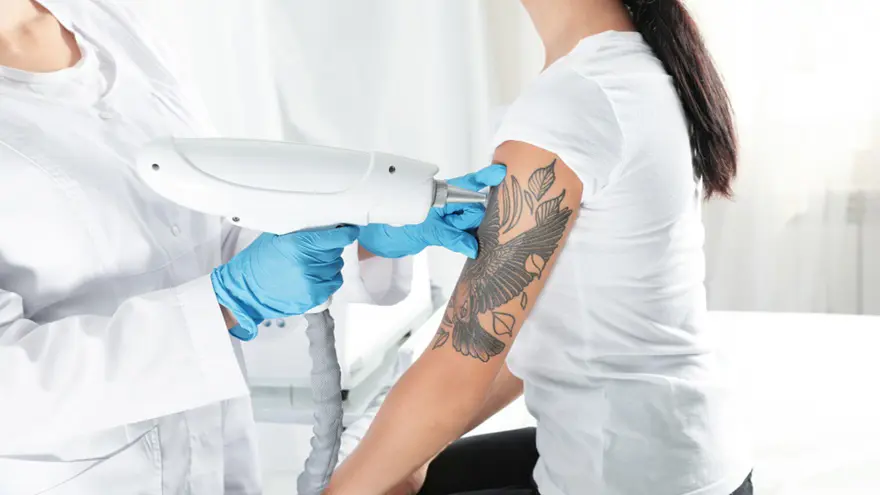
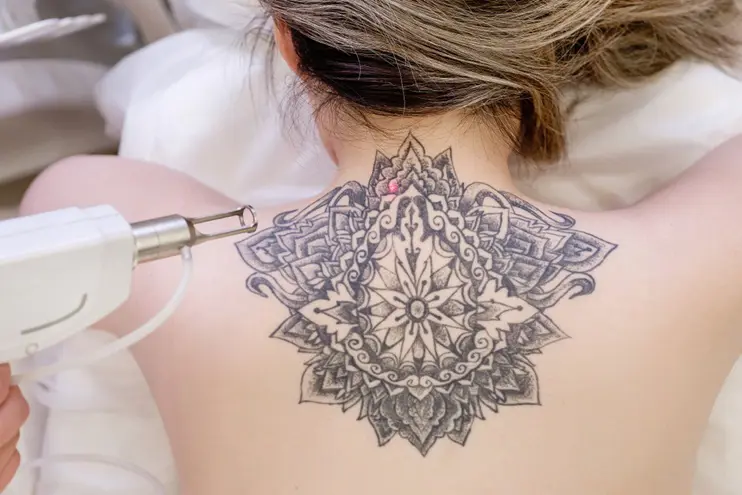
Most modern tattoo removal is performed using laser technology, which targets pigment particles beneath the skin.
The laser:
- Delivers energy in very short pulses
- Shatters ink particles into smaller fragments
- Allows the immune system to gradually clear the pigment
Here’s the critical part for sensitive skin:
The laser does not remove ink directly — your body does. That means inflammation, circulation, lymphatic drainage, and tissue healing all play a role. If your skin reacts strongly to injury, the goal is not maximum power — it’s controlled stimulation without overwhelming the tissue.
Laser Tattoo Removal and Sensitive Skin
Power Is Not the Same as Effectiveness
One of the biggest misconceptions is that higher laser energy removes tattoos faster.
For sensitive skin, this is often the opposite.
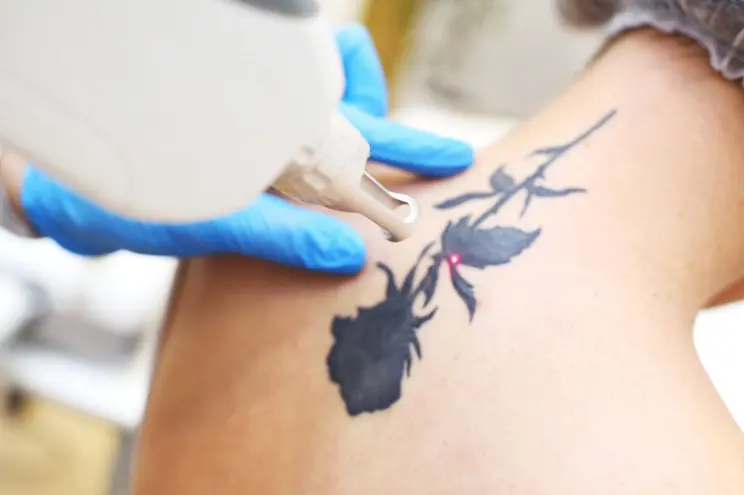
Over-aggressive settings can lead to:
- Blistering
- Prolonged redness
- Post-inflammatory hyperpigmentation
- Textural changes
- Scarring (in rare but real cases)
At Sinsang, we deliberately start with lower fluence and longer intervals for patients with reactive skin. This allows the skin to recover fully between sessions and reduces cumulative trauma.
Slower does not mean worse. In fact, for sensitive skin, it often means better long-term outcomes.
Ink Color and Depth Matter More Than You Think
Sensitive skin reacts not only to lasers — but to how deeply the ink sits.
Professional tattoos tend to be:
- Deeper
- More uniform
- Harder to remove
Certain colors (green, blue, yellow) require different wavelengths and more sessions. Each additional session increases inflammatory exposure — something we must carefully manage in sensitive patients.
This is why we insist on pre-treatment evaluation, sometimes including imaging or test spots, before committing to a full removal plan.
Areas of the Body That Require Extra Caution
Sensitive skin behaves differently depending on location.
Areas that tend to react more strongly during tattoo removal include:
- Neck and collarbone
- Inner arms and wrists
- Ankles and feet
- Rib cage
These regions have thinner skin, less subcutaneous fat, and slower circulation — all of which affect healing.
A responsible clinic will adjust laser parameters by body area, not just by tattoo color.
Healing Response: The Real Risk for Sensitive Skin
The biggest risk in tattoo removal for sensitive skin is not the laser itself — it’s how the skin heals afterward.
Post-Inflammatory Pigmentation
Patients with sensitive or reactive skin are more prone to:
- Temporary darkening (PIH)
- Temporary lightening (hypopigmentation)
These changes are usually reversible — but only if inflammation is well controlled and aftercare is followed carefully.
Prolonged Redness or Texture Changes
If sessions are too frequent or energy too high, sensitive skin may not fully reset between treatments. This is why we often recommend longer intervals (8–12 weeks) rather than rushing.
Healing quality always outweighs speed.
Why Aftercare Is Not Optional (Especially for Sensitive Skin)?
To be honest, aftercare is where many problems begin.
Laser removal creates controlled micro-injury. What you do in the days and weeks afterward determines whether your skin heals smoothly or develops complications.
For sensitive skin, aftercare typically includes:
- Strict sun avoidance
- Medical-grade soothing and barrier-repair products
- Avoidance of friction, heat, and active skincare
- Close monitoring for abnormal reactions
At Sinsang, we tailor aftercare protocols based on skin reactivity, not a generic checklist. This is especially important for foreign patients unfamiliar with Korea’s climate and UV exposure patterns.
Can Regenerative Therapies Help Sensitive Skin During Tattoo Removal?
This is an area many clinics don’t discuss — but it matters.
For patients with:
- Poor healing history
- Repeated inflammation
- Early pigment changes
We sometimes incorporate regenerative adjuncts, such as stem cell–derived or growth factor–based therapies, to support tissue recovery.
These treatments do not remove ink. What they do is:
- Improve healing quality
- Reduce inflammation duration
- Support more even skin recovery
In sensitive skin, this can make the difference between an acceptable outcome and a frustrating one.
How Many Sessions Will You Really Need?

This is the question everyone asks — and the one that deserves the most honest answer.
For sensitive skin, expect:
- More sessions-Lower intensity-Longer overall timeline
While some patients with resilient skin can tolerate aggressive protocols, sensitive skin requires patience. Rushing increases risk without meaningfully improving results.
A realistic plan prioritizes:
- Skin integrity
- Even tone
- Minimal scarring
Ink removal is temporary. Skin damage can be permanent.
Choosing the Right Clinic Is Especially Important for Sensitive Skin
Tattoo removal is often marketed as a simple laser procedure.
In reality, for sensitive skin, it is closer to a medical treatment plan than a cosmetic service.
You should look for a clinic that:
- Is led by board-certified surgeons
- Performs detailed skin and tattoo evaluation
- Adjusts protocols by anatomy and skin response
- Has experience managing complications, not just treatments
At Sinsang Plastic and Reconstructive Surgery, we approach tattoo removal with the same philosophy we bring to surgery: precision, restraint, and long-term skin health.
Final Thoughts: Should Sensitive Skin Stop You From Tattoo Removal?
No — but it should slow you down.
Tattoo removal for sensitive skin is absolutely possible. It simply requires:
- Honest expectation setting
- Conservative technique
- Respect for your skin’s limits
If you’ve been hesitant because of past reactions or fear of scarring, a proper consultation can clarify what is realistic — and what approach protects your skin best.
Sometimes the most successful treatment is not the fastest one, but the one your skin can heal from beautifully.
If you’re considering tattoo removal and know your skin needs extra care, consulting a surgeon-led clinic like Sinsang Plastic and Reconstructive Surgery in Gangnam can help you make an informed, safe decision — without unnecessary risk.
Clinical Guidance & Recovery Considerations
All surgical and non-surgical treatments carry potential risks such as temporary swelling, bruising, asymmetry, or infection depending on individual anatomy. Detailed indications and personalized recovery expectations are confirmed during in-person ultrasonic evaluation with a Sinsang board-certified specialist.
Patient Concierge
Gangnam Station / Sinsa Area · 150 Dosan-daero 5F–6F, Seoul
Mon–Thu 10:00–19:00 · Fri 10:00–21:00 · Sat 10:00–17:00
Online Inquiry Form →WhatsApp (+1 201-940-3238)LINE (@853akazy)CONTINUE EXPLORING
More Medical Insights

Rising Demand for Double Chin Revision Surgery: Korean Market Price Trends
Rising Demand for Double Chin Revision Surgery: Korean Market Price Trends
Explore →

What is fat grafting - Procedure, Uses, Types, Benefits, and Risks
What is fat grafting - Procedure, Uses, Types, Benefits, and Risks
Explore →

Why 9,000 Global Patients Chose Seoul for Specialized Neck Contouring Surgery
Why 9,000 Global Patients Chose Seoul for Specialized Neck Contouring Surgery
Explore →
INTERNATIONAL CONCIERGE · GANGNAM, SEOUL
Begin Your Personalized Surgical Plan With Sinsang Specialists
Share your goals online or connect directly via our official WhatsApp or LINE concierge for pre-travel assessment and scheduling.