

CLINICAL ARTICLE
Natural Contour Results: Better Scores in Korean Under-Eye Care
Natural Contour Results: Better Scores in Korean Under-Eye Care
The demand for facial rejuvenation in South Korea has seen a significant shift toward procedures that preserve natural facial expressions while effectively addressing signs of aging. According to domestic aesthetic market analyses, under-eye concerns—such as dark circles, tear trough deformities, and bulging infraorbital fat bags—rank among the top aesthetic complaints for individuals aged 30 to 70. A recent Korean nationwide survey on aesthetic preferences indicated that over 65% of patients seeking facial rejuvenation prioritize "natural contouring without visible scarring" over drastic structural alterations.
For both local residents and international patients traveling to Seoul, managing the delicate periorbital region requires a high degree of precision. Sinsang Plastic and Reconstructive Surgery has observed a growing demographic of patients seeking specialized under-eye interventions that offer long-term satisfaction without the traditional downtime associated with open surgical alterations. As the global market for specialized periorbital procedures grows at an estimated compound annual growth rate (CAGR) of 7.8%, understanding the structural data and clinical pathways behind these procedures becomes essential for making informed healthcare choices.
Under-Eye Fat Removal in Korea: Benefits, Risks, and Ideal Candidates

The structural anatomy of the under-eye area involves a complex interplay of retaining ligaments, specialized fat pads, and thin cutaneous layers. When the orbital septum weakens over time, the pseudoherniation of infraorbital fat creates noticeable bags and deep shadows.
Ideal Candidates for the Procedure
- Ages 30–40: Individuals experiencing early-stage fat herniation with maintained skin elasticity, often presenting with chronic dark shadows or a tired appearance.
- Ages 50–70: Patients exhibiting more pronounced fat protrusion combined with mild-to-moderate skin laxity, requiring precise fat redistribution to smooth the transition to the cheek.
- International and Busy Professionals: Individuals requiring low-downtime, high-precision procedures that fit into tight travel or professional schedules.
Expected Benefits
- Restored Contour Smoothness: Eliminates the sharp demarcation between the lower eyelid and the upper cheek (the tear trough).
- Reduction in Shadowing: Lightens the appearance of structural dark circles caused by the overhang of bulging fat.
- Preservation of Eye Shape: Maintains the natural Aegyo-sal (the youthful lower eyelid fullness) by operating beneath the muscle layer.
Potential Risks and Safety Considerations
While generally safe when performed by board-certified specialists, potential risks include temporary ecchymosis (bruising), transient localized edema, and under-correction or over-correction of the fat pads. Ensuring an accurate pre-operative assessment minimizes the risk of a hollowed appearance post-surgery.
Traditional Lower Blepharoplasty Costs and Outcomes in Korea
Historically, the standard approach to addressing lower eyelid aging in Korea involved traditional transcutaneous lower blepharoplasty. This method utilizes an external incision directly beneath the lower eyelash line to excise excess skin and remove herniated fat.
Conventional Pathways and Benchmarks
- Procedure Frequency & Hospitalization: Typically performed under local anesthesia with sedation, requiring 5 to 7 days before suture removal.
- Price Ranges: Traditional transcutaneous approaches in Seoul typically range from 2,500,000 KRW to 4,500,000 KRW, depending on the complexity of the muscle suspension required.
- Re-intervention Rates: Approximately 8% to 12% of patients undergoing traditional external excisions report concerns regarding altered eye shape or visible scarring over a 5-year follow-up window.
Limitations of Traditional External Excision
- Visible Scarring: The subciliary incision lines can remain pink or hyperpigmented for several months, particularly in darker skin phototypes.
- Risk of Ectropion: Excessive skin excision can lead to an outward turning of the lower eyelid, causing chronic dry eye and functional complications.
- Extended Recovery Downtime: Significant swelling and bruising often persist for 2 to 4 weeks, disrupting rapid return to daily activities.
High-Precision Transconjunctival Under-Eye Fat Rearrangement
To address the limitations of external incisions, the advanced standard in Korean periorbital care relies on High-Precision Transconjunctival Under-Eye Fat Rearrangement. This technique accesses the herniated fat pads through the internal membrane of the eyelid (the conjunctiva), completely avoiding external skin incisions.
[Traditional Transcutaneous] -> External Incision -> Skin/Fat Excision -> Risk of Scarring
[Transconjunctival Rearrangement] -> Internal Incision -> Fat Redistribution -> Invisible Scarring
Mechanism and Technical Principle
Instead of simply resecting and discarding the protective orbital fat, High-Precision Transconjunctival Under-Eye Fat Rearrangement mobilizes the excess fat and translocates it into the sunken tear trough matrix. The tissue is secured beneath the periosteum using precise suture fixation. This fills the hollow deficiency using the patient’s own living tissue, maintaining blood supply and preventing long-term resorption.
Why It Is Considered Tech-Driven and Minimally Invasive
By utilizing ultra-fine microscopic or endoscopic visualization, plastic surgeons can precisely identify the three distinct fat compartments (medial, central, and lateral). This high-precision tracking limits trauma to the surrounding orbicularis oculi muscle and prevents damage to the inferior oblique muscle, significantly accelerating tissue healing.
Is High-Precision Transconjunctival Under-Eye Fat Rearrangement in Korea worth the cost?
Yes, for patients seeking long-term structural correction without external scarring. While the upfront investment reflects specialized microsurgical expertise, the procedure yields exceptionally high patient satisfaction scores due to minimal downtime and a very low incidence of secondary revision complications compared to repetitive temporary fillers.
Clinical Comparison: Conventional Excision vs. Advanced Rearrangement
Clinical monitoring of periorbital procedures underscores a clear distinction in patient recovery trajectories and structural longevity between simple fat removal and structural redistribution.
| Comparison Metric | Conventional Transcutaneous Excision | High-Precision Transconjunctival Rearrangement |
|---|---|---|
| Incision Site | External (Subciliary line) | Internal (Inside the conjunctiva) |
| Visible Scarring | Potential for fine visible lines | Zero external scarring |
| Fat Management | Excision/Removal | Mobilization and Redistribution |
| Average Recovery Window | 14 to 21 Days | 5 to 7 Days |
| Risk of Eyelid Malposition | Moderate (Risk of ectropion) | Negligible |
| Tear Trough Correction | Limited (Requires separate grafting) | Excellent (Simultaneous filling) |
Data from localized clinical observations indicate that patients undergoing High-Precision Transconjunctival Under-Eye Fat Rearrangement report a return to normal social and professional activities within an average of 5.2 days, compared to 16.4 days for those undergoing external subciliary resections.
South Korean Patient Trends and Aesthetic Expectations
The evolution of Under-Eye Fat Removal in South Korea is closely tied to the strict demands of domestic consumers. Korean patients exhibit high medical literacy and prioritize procedures that offer a "natural contour" rather than an obviously operated appearance. The primary goal is to look refreshed and well-rested, ensuring that the dynamic movement of the face during smiling remains unaltered.
Furthermore, regulatory pathways governed by the Ministry of Food and Drug Safety (MFDS) ensure that surgical instrumentation, suture materials, and energy-based hemostatic devices utilized during High-Precision Transconjunctival Under-Eye Fat Rearrangement meet stringent safety standards. This robust medical infrastructure has positioned Seoul as a premier destination for international patients seeking advanced periorbital rejuvenation that combines subtle aesthetic refinement with rapid structural healing.
Where Sinsang Plastic and Reconstructive Surgery Fits in Under-Eye Care in Korea
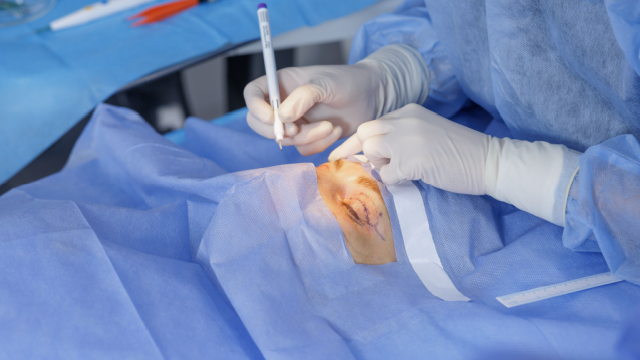
Where Sinsang Plastic and Reconstructive Surgery Fits in Under-Eye Fat Removal in Korea is defined by a commitment to anatomical precision and individualized patient care. The clinic utilizes a specialized protocol for High-Precision Transconjunctival Under-Eye Fat Rearrangement, carefully mapping each patient's unique three-dimensional vascular and fat distribution profile prior to execution.
At Sinsang Plastic and Reconstructive Surgery, board-certified plastic surgeons leverage years of reconstructive and aesthetic micro-surgical experience to perform the delicate internal approach. By prioritizing the preservation of the orbital septum and optimizing the fixation of relocated fat pads, the surgical team focuses on achieving long-term structural harmony. The clinic’s post-operative recovery suite incorporates targeted swelling care management to ensure a smooth, predictable transition back to daily life for both local and overseas patients.
Conclusion
Addressing infraorbital aging requires balancing effective structural rejuvenation with the preservation of natural facial dynamics. While traditional external excision pathways remain useful for cases with severe skin redundancy, they carry higher risks of visible scarring and prolonged downtime. High-Precision Transconjunctival Under-Eye Fat Rearrangement offers an advanced, internally accessed alternative that successfully addresses both tissue bulging and volume deficiencies simultaneously. Patients considering Under-Eye Fat Removal in Korea can schedule a consultation to discuss whether this approach may be suitable for their specific condition and goals.
Clinical Guidance & Recovery Considerations
All surgical and non-surgical treatments carry potential risks such as temporary swelling, bruising, asymmetry, or infection depending on individual anatomy. Detailed indications and personalized recovery expectations are confirmed during in-person ultrasonic evaluation with a Sinsang board-certified specialist.
Patient Concierge
Gangnam Station / Sinsa Area · 150 Dosan-daero 5F–6F, Seoul
Mon–Thu 10:00–19:00 · Fri 10:00–21:00 · Sat 10:00–17:00
Online Inquiry Form →WhatsApp (+1 201-940-3238)LINE (@853akazy)CONTINUE EXPLORING
More Medical Insights

Rising Demand for Double Chin Revision Surgery: Korean Market Price Trends
Rising Demand for Double Chin Revision Surgery: Korean Market Price Trends
Explore →

What is fat grafting - Procedure, Uses, Types, Benefits, and Risks
What is fat grafting - Procedure, Uses, Types, Benefits, and Risks
Explore →

Why 9,000 Global Patients Chose Seoul for Specialized Neck Contouring Surgery
Why 9,000 Global Patients Chose Seoul for Specialized Neck Contouring Surgery
Explore →
INTERNATIONAL CONCIERGE · GANGNAM, SEOUL
Begin Your Personalized Surgical Plan With Sinsang Specialists
Share your goals online or connect directly via our official WhatsApp or LINE concierge for pre-travel assessment and scheduling.