
CLINICAL ARTICLE
Most Common Facial Surgeries in 2025: What Patients Are Requesting
Most common facial surgeries in 2025: trending procedures patients request, outcomes, and what to expect. Discover top options and expert insights—learn more now!
Most Common Facial Surgeries in 2025: What Patients Are Requesting
If you walk through Gangnam today, the most striking change isn’t how many people look “beautiful.” It’s how undetectable that beauty has become.
Faces no longer appear tight, frozen, or exaggerated. Instead, people look rested. Sharper around the eyes. Cleaner at the jawline. Softer in the midface. The improvements are often subtle, but the overall effect is unmistakable—faces that appear younger without looking surgically altered.
This is exactly what patients are asking for in 2025.
At Sinsang Plastic and Reconstructive Surgery, we hear the same sentence repeatedly:
“I don’t want to change my face. I just want it to look like it used to.”
Understanding the most common facial surgeries in 2025 means understanding why people are choosing surgery, how facial aging truly works, and what has changed in surgical philosophy. Patients are no longer chasing dramatic transformations. They are seeking structural correction, biological respect, and long-term natural aging.
Below is a medically grounded explanation of the facial surgeries patients are requesting most this year—and what’s really happening beneath the skin when these procedures work well.
2025: The Era of Structural, Subtle Facial Surgery
Facial surgery in 2025 is not defined by trends or techniques—it is defined by restraint.
Patients are better informed. Many have tried years of injectables, skin treatments, and devices. They’ve learned that while these options can help, they do not stop gravity, ligament laxity, or deep structural descent.
What they want now is surgical precision with minimal disruption.
This has led to:
- earlier intervention, before aging becomes severe
- smaller, targeted procedures rather than full transformations
- combination strategies that address support, volume, and skin quality together
The most requested surgeries reflect this shift.
1. Eyelid Surgery (Blepharoplasty): Still the Most Requested Facial Operation

Eyelid surgery remains the most commonly requested facial procedure in 2025—and for good reason.
The eyes dominate human perception. Even small changes in eyelid shape can make someone appear tired, angry, or older than they feel. And unlike many facial features, eyelid aging affects both appearance and function.
What actually ages in the eyelids?
Eyelid aging is not just “extra skin.” It is a combination of:
- thinning, stretching eyelid skin
- weakening of the orbital septum
- forward bulging of orbital fat
- descent of the brow complex
- loss of midface support under the lower lid
Treating only one of these factors often leads to unnatural results.
How modern blepharoplasty differs?
In 2025, eyelid surgery is no longer about removing as much tissue as possible. It is about preservation and balance.
- Fat is often repositioned rather than removed
- Skin excision is conservative
- Lid support and muscle function are protected
- The eyelid–cheek transition is carefully evaluated
This approach avoids hollow eyes, lid retraction, and the “over-operated” look many patients fear.
One important truth we often share: if you are worried about looking unnatural after eyelid surgery, the risk usually lies in poor planning, not in the procedure itself.
2. Facelift and Neck Lift: Earlier, Smarter, and More Anatomical
Facelifts are no longer reserved for patients in their 60s or 70s.
In 2025, we are seeing patients in their 40s and early 50s seeking lifting procedures—not because they want dramatic change, but because they want to correct early structural descent before it accelerates.
What patients are really concerned about?
Rarely does someone walk in asking for “a facelift.” Instead, they describe:
- jowls that blur the jawline
- a heaviness in the lower face
- a neck that looks loose in photos or video
- a tired or downturned facial expression
These issues are not caused by loose skin alone. They originate in the SMAS layer and retaining ligaments.
Why lifting has changed?
The face is built in layers:
- skin
- fat compartments
- SMAS (the facial support layer)
- retaining ligaments
- muscles and deeper fat
- bone structure
A natural facelift works by repositioning support structures first, then allowing the skin to rest naturally on top. When surgeons rely too heavily on skin tension, results look pulled and short-lived.
Modern lifting in 2025 emphasizes:
- SMAS repositioning
- strategic release of retaining ligaments
- precise lifting vectors
- minimal skin tension
The goal is not tightness—it is restored geometry.
The neck cannot be ignored
Jawline and neck aging are inseparable.
A clean jawline depends on:
- platysma muscle integrity
- deep vs superficial fat distribution
- submandibular gland position
- chin projection and skeletal support
This is why neck contouring often fails when only liposuction or skin tightening is performed. Correct diagnosis determines whether a patient needs liposuction, muscle tightening, a neck lift, chin support—or a combination.
3. Rhinoplasty: Refinement, Balance, and Aging Correction
Rhinoplasty remains one of the most requested facial surgeries, but the motivations have evolved.
In 2025, patients are not asking for dramatic reshaping. They are asking for balance.
Two main patient groups
We commonly see:
- Younger patients seeking subtle refinement that harmonizes with their facial proportions
- Older patients noticing that their nose has changed with age—drooping tip, heavier appearance, or breathing issues
The nose ages too. Ligaments weaken, tip support declines, and facial volume changes around the nose alter its visual dominance.
A critical clinical insight
Many patients believe their nose is “getting bigger.” In reality, the surrounding face may be losing support—particularly in the midface and jawline—making the nose appear more prominent.
In these cases, improving overall facial balance can be more effective than aggressive nasal reduction.
Modern rhinoplasty in 2025 prioritizes:
- structural support
- conservative reshaping
- long-term stability
- facial harmony over isolated perfection
4. Facial Fat Grafting: Restoring Youthful Transitions
One of the most important yet misunderstood procedures in 2025 is facial fat grafting.
A youthful face is not only lifted—it is supported by volume in the right places.
Why volume loss matters?
Facial fat is organized into compartments. With aging and weight loss:
- some compartments shrink
- others descend
- transitions between facial zones become harsh
This leads to:
- hollow under-eyes
- flattened cheeks
- deep nasolabial folds
- an overall tired appearance
Fat grafting restores these transitions when used carefully.
Weight loss and facial aging
The rise of medical weight loss has changed facial surgery planning. Rapid fat loss can make the face appear aged even in younger patients.
In these cases, lifting alone may worsen gauntness. Strategic fat grafting can restore balance and soften results.
The key is restraint. Overfilling creates heaviness. Proper grafting respects anatomy, blood supply, and long-term integration.
5. Submental Liposuction and Neck Contouring
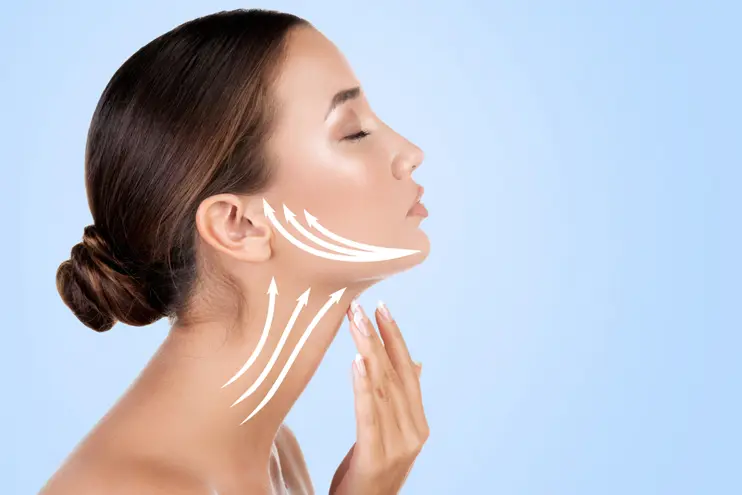
The area under the chin is one of the most photographed regions of the face in 2025—especially in video calls.
Submental liposuction remains a popular request, but it is only effective when chosen correctly.
When liposuction works well?
- good skin elasticity
- primarily superficial fat
- minimal muscle laxity
When it does not?
- significant platysma separation
- deep fat accumulation
- gland prominence
- poor chin projection
In these cases, liposuction alone can lead to irregularity or insufficient improvement. Proper evaluation prevents disappointment.
6. Smaller, Targeted Facial Procedures
Procedures such as buccal fat removal, chin augmentation, and cheek implants continue to be requested—but far more selectively.
In 2025, surgeons are increasingly cautious with permanent volume removal. Faces continue to lose fat with age, and overly aggressive contouring can accelerate an aged appearance later.
These procedures are best viewed as structural tools, not trends.
What Truly Determines Success in 2025?
Across all facial surgeries, outcomes depend less on the procedure name and more on:
- accurate diagnosis of the aging mechanism
- respect for facial anatomy and movement
- conservative, well-planned correction
- thoughtful healing support
A good consultation should explain why a problem exists, not just how it can be treated.
At Sinsang Plastic and Reconstructive Surgery, our philosophy is surgeon-responsibility. We use advanced diagnostics, precise planning, and regenerative support when appropriate—not to chase trends, but to protect long-term facial harmony.
A Final Thought for Patients Considering Facial Surgery
If you are exploring facial surgery in 2025, start with this question:
“What is structurally changing in my face—and what is the least aggressive way to restore balance?”
When surgery is chosen for the right reason, at the right time, and with the right plan, the result should not announce itself.
It should simply look like you—rested, clear, and comfortably yourself again.
That is the direction facial surgery is moving toward in 2025.
Clinical Guidance & Recovery Considerations
All surgical and non-surgical treatments carry potential risks such as temporary swelling, bruising, asymmetry, or infection depending on individual anatomy. Detailed indications and personalized recovery expectations are confirmed during in-person ultrasonic evaluation with a Sinsang board-certified specialist.
Patient Concierge
Gangnam Station / Sinsa Area · 150 Dosan-daero 5F–6F, Seoul
Mon–Thu 10:00–19:00 · Fri 10:00–21:00 · Sat 10:00–17:00
Online Inquiry Form →WhatsApp (+1 201-940-3238)LINE (@853akazy)CONTINUE EXPLORING
More Medical Insights

Rising Demand for Double Chin Revision Surgery: Korean Market Price Trends
Rising Demand for Double Chin Revision Surgery: Korean Market Price Trends
Explore →

What is fat grafting - Procedure, Uses, Types, Benefits, and Risks
What is fat grafting - Procedure, Uses, Types, Benefits, and Risks
Explore →

Why 9,000 Global Patients Chose Seoul for Specialized Neck Contouring Surgery
Why 9,000 Global Patients Chose Seoul for Specialized Neck Contouring Surgery
Explore →
INTERNATIONAL CONCIERGE · GANGNAM, SEOUL
Begin Your Personalized Surgical Plan With Sinsang Specialists
Share your goals online or connect directly via our official WhatsApp or LINE concierge for pre-travel assessment and scheduling.