

CLINICAL ARTICLE
Korean Rhinoplasty Demand: High Volume of Natural Structural Nose Care
Korean Rhinoplasty Demand: High Volume of Natural Structural Nose Care
In the rapidly evolving landscape of Korean aesthetic medicine, the focus of rhinoplasty has shifted significantly toward long-term structural integrity and a "natural" aesthetic. Recent data from the Korean Rhinologic Society indicates a marked transition in research and surgical interest: while early 2010s trends favored basic augmentation, current methodologies emphasize functional conditions and methodological precision. For the increasing number of patients—particularly those aged 30–70—the priority is no longer just "getting a taller nose," but ensuring the nose remains structurally sound, functional, and aesthetically harmonious as they age.
At Sinsang Plastic and Reconstructive Surgery, we observe this demand daily. Patients are increasingly moving away from "quick-fix" fillers, which carry risks of vascular complications, toward durable, regenerative-based structural care. By utilizing autologous materials and advanced architectural planning, we aim to deliver results that prioritize both safety and longevity, reflecting a broader trend across Korea toward high-precision, sustainable aesthetic outcomes.
Why Is “Natural Structural Care” Becoming the Standard in Korea?

The modern Korean patient is exceptionally well-informed. With the rise of medical transparency, there is growing concern regarding the long-term complications of traditional alloplastic implants (such as silicone or non-absorbable meshes), which can include extrusion, inflammation, or unnatural warping over time.
How Does Structural Rhinoplasty Differ from Traditional Methods?
- Traditional Approach: Often relies on L-shaped silicone implants to augment the bridge and tip simultaneously, which can exert pressure on the nasal skin and lead to long-term thinning or displacement.
- Structural Approach: Focuses on reconstructing the nose’s internal support system using the patient's own tissue or specialized bio-scaffolds. This creates a "framework" that supports the nose from within, allowing the soft tissues to drape naturally over a stable foundation.
| Feature | Traditional Augmentation | Structural Rhinoplasty |
|---|---|---|
| Primary Material | Silicone / Alloplastic implants | Autologous cartilage / Bio-scaffolds |
| Focus | Instant high projection | Long-term stability & function |
| Risk Profile | Higher risk of extrusion/capsule issues | Lower risk; better tissue integration |
| Recovery | Faster, but prone to "re-do" needs | Longer initial healing; superior durability |
The Advanced Approach: Regenerative Structural Frameworks
At the forefront of this shift is Regenerative Structural Rhinoplasty, a method that emphasizes the use of autologous (patient-derived) cartilage or biocompatible, absorbable scaffolds (such as Polycaprolactone, or PCL) that encourage native tissue integration.
How It Works
Instead of using a rigid, foreign object to "push" the skin into a shape, this technique uses a scaffold to provide structural support while the patient’s own tissues (or the regenerative material) stabilize the nasal tip and dorsum. By reinforcing the nasal valve and septum, we not only improve the aesthetic profile but also ensure optimal airflow.
Is Regenerative Structural Rhinoplasty Worth the Investment?
Yes, for patients seeking a "one-and-done" solution. While the initial procedure requires more surgical time and higher precision than simple filler injections or standard silicone placement, it significantly reduces the likelihood of revision surgeries. Most patients find that the peace of mind and the natural, age-appropriate results offer better long-term value than the recurring costs and risks associated with repeated non-surgical interventions.
Data & Outcomes: What Can Patients Expect?
Clinical observations in South Korea suggest that patients prioritizing structural integrity experience higher long-term satisfaction rates. While "beauty" is subjective, functional metrics—such as the preservation of the internal nasal valve and the maintenance of tip projection over time—are measurable indicators of success.
- Longevity: Research into nasal tip reshaping techniques shows that structural reinforcement (e.g., septal extension grafts) provides significantly more stable projection compared to suture-only techniques, which are often insufficient for the specific anatomical needs of the Korean nose (often characterized by a broader, flatter cartilaginous structure).
- Safety: By minimizing the reliance on bulky foreign implants, surgeons reduce the "pressure" on the nasal skin envelope, which is a common cause of late-stage complications in older patients.
Where Sinsang Plastic and Reconstructive Surgery Fits In
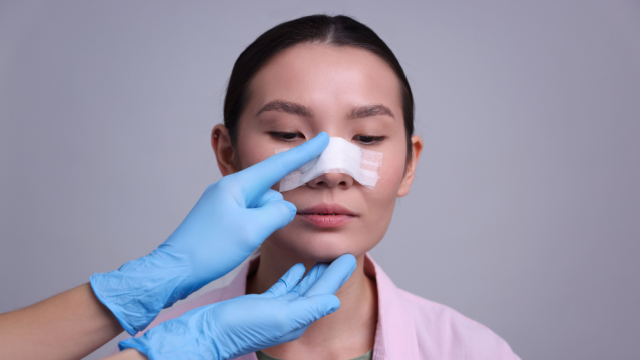
Sinsang Plastic and Reconstructive Surgery is committed to the philosophy of Root-Cause Aesthetics. We believe that a beautiful nose is one that breathes well, ages gracefully, and requires minimal future intervention.
Our Specialized Protocol
- AI-Assisted Structural Planning: Before surgery, we analyze your facial architecture to determine the optimal support structure needed, ensuring the result is in harmony with your unique features.
- Precision Structural Grafting: We prioritize the use of your own septal or costal cartilage, or bio-regenerative scaffolds, to create a foundation that mimics your natural anatomy.
- Conservative Tissue Handling: Our team focuses on the "Skin-Soft Tissue Envelope" (SSTE). By handling these tissues with minimal tension, we reduce the risk of fibrosis and contracture.
Our surgical team, led by experienced specialists in reconstructive and aesthetic rhinoplasty, brings decades of collective experience in managing complex secondary revisions and primary structural augmentations. We view every procedure as a commitment to your long-term quality of life.
Conclusion
Patients considering Regenerative Structural Rhinoplasty in Korea are encouraged to schedule a consultation. During this visit, we will assess your nasal anatomy, discuss your aesthetic goals, and determine whether a structural approach is the most suitable path to achieving the natural, lasting results you desire.
Clinical Guidance & Recovery Considerations
All surgical and non-surgical treatments carry potential risks such as temporary swelling, bruising, asymmetry, or infection depending on individual anatomy. Detailed indications and personalized recovery expectations are confirmed during in-person ultrasonic evaluation with a Sinsang board-certified specialist.
Patient Concierge
Gangnam Station / Sinsa Area · 150 Dosan-daero 5F–6F, Seoul
Mon–Thu 10:00–19:00 · Fri 10:00–21:00 · Sat 10:00–17:00
Online Inquiry Form →WhatsApp (+1 201-940-3238)LINE (@853akazy)CONTINUE EXPLORING
More Medical Insights

Rising Demand for Double Chin Revision Surgery: Korean Market Price Trends
Rising Demand for Double Chin Revision Surgery: Korean Market Price Trends
Explore →

What is fat grafting - Procedure, Uses, Types, Benefits, and Risks
What is fat grafting - Procedure, Uses, Types, Benefits, and Risks
Explore →

Why 9,000 Global Patients Chose Seoul for Specialized Neck Contouring Surgery
Why 9,000 Global Patients Chose Seoul for Specialized Neck Contouring Surgery
Explore →
INTERNATIONAL CONCIERGE · GANGNAM, SEOUL
Begin Your Personalized Surgical Plan With Sinsang Specialists
Share your goals online or connect directly via our official WhatsApp or LINE concierge for pre-travel assessment and scheduling.