

CLINICAL ARTICLE
How to Fade Old Scars with Regenerative Therapy?
Discover how regenerative therapy can help fade old scars by boosting natural healing and skin renewal. Explore effective, non-invasive options—learn more now!
How to Fade Old Scars with Regenerative Therapy?

Most patients don’t come in asking to erase a scar completely.
They ask something more honest.
“It’s old. I know it won’t disappear. But can it look… less obvious?”
At Sinsang Plastic and Reconstructive Surgery in Gangnam, this is a conversation we have almost every day. Old acne scars. Surgical scars. Childhood injuries. Scars that are no longer painful — but still emotionally present.
And here’s the truth we share early, because trust matters:
Old scars don’t fade the same way new wounds heal.
But with regenerative therapy, they can often soften, blend, and improve in ways that were not possible even a decade ago.
Not through aggressive resurfacing.
Not through camouflage.
But by improving how the skin functions again.
Let’s talk about what regenerative scar therapy really means — and how it works when done properly.
Why Old Scars Are So Difficult to Treat?
To understand how regenerative therapy helps, you first need to understand what makes old scars stubborn.
When skin heals after injury, the body prioritizes speed and closure — not aesthetics. Collagen is laid down quickly and densely, often in disorganized bundles. Blood supply decreases. Elasticity is lost.
Over time, an old scar becomes:
- Poorly vascularized
- Structurally rigid
- Biologically inactive
In simple terms, the skin has stopped “trying” to remodel itself.
This is why topical creams rarely work on mature scars, and why aggressive treatments can sometimes make scars worse rather than better.
Old scars don’t need more damage.
They need biological reactivation.
That’s where regenerative therapy comes in.
What Is Regenerative Therapy for Scar Fading?
Regenerative therapy focuses on restoring the skin’s ability to heal, remodel, and normalize — rather than forcing change through destruction.
At Sinsang, regenerative scar treatment may involve a combination of:
- Stem cell–derived therapies-Growth factor–based injections-PRP (platelet-rich plasma)-Microneedling or subcision combined with regenerative support-Adjunctive laser or energy-based treatments used conservatively
The goal is not to “remove” the scar, but to:
- Improve collagen organization
- Increase microcirculation
- Restore elasticity and thickness
- Reduce contrast between scarred and normal skin
In other words, we aim to make the scar behave more like healthy skin.
How Regenerative Therapy Changes Scar Biology?
This is the part many patients don’t hear explained — but it matters.
Reactivating Dormant Tissue
Old scars are biologically quiet. Regenerative treatments introduce signaling molecules that:
- Stimulate fibroblast activity
- Encourage new collagen production (Type I, not just dense Type III)
- Promote angiogenesis (new blood vessel formation)
This doesn’t happen overnight. But once the tissue “wakes up,” gradual improvement becomes possible.
Improving Skin Quality, Not Just Surface Texture
Many traditional treatments focus only on surface smoothing.
Regenerative therapy works deeper:
- Improving dermal thickness
- Enhancing elasticity
- Reducing stiffness and tethering
Patients often tell us:
“The scar feels softer before it looks better.”
That’s a very good sign.
Types of Scars That Respond Best to Regenerative Therapy
Not all scars behave the same way, and honesty here is important.
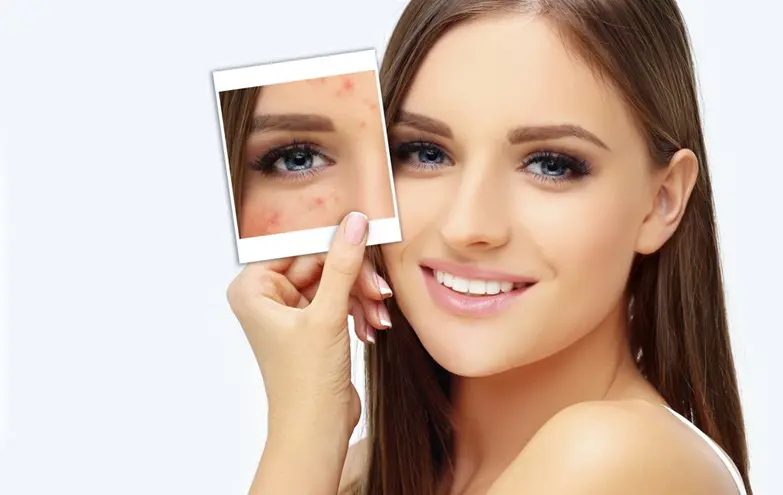
Acne Scars (Especially Depressed or Tethered)
These are some of the best candidates.
When combined with:
- Subcision to release fibrotic bands
- Regenerative injections to support healing
we often see progressive improvement in texture and depth over several months.
Surgical Scars
Even years-old surgical scars can improve in:
- Color blending
- Thickness
- Flexibility
Especially when there is tightness or uneven texture.
Traumatic Scars
Results depend on depth and extent, but regenerative therapy can:
- Soften borders
- Improve skin tone match
- Reduce stiffness
Scars That Require Caution
Some scars need a more restrained approach.
- Keloids and hypertrophic scars require careful evaluation
- Overstimulation can worsen them
- Regenerative therapy may still be used — but often in combination with medical management
This is why surgeon-led assessment matters. Not every scar should be treated the same way.
What the Treatment Process Usually Looks Like?

Step 1: Detailed Scar Assessment
We evaluate:
- Scar age
- Depth and width
- Color contrast
- Skin thickness
- Mobility (is it tethered?)
Advanced imaging may be used to understand dermal structure — especially for facial scars.
Step 2: Customized Combination Plan
Rarely does one treatment do everything.
A plan may include:
- Mechanical release (subcision or microneedling)
- Regenerative injections to guide healing
- Conservative energy-based treatment if appropriate
The order matters. Timing matters. Over-treatment is avoided.
Step 3: Staged Healing, Not One-Time Fixes
Regenerative scar fading is cumulative.
Most patients need:
- Multiple sessions
- Several weeks between treatments
- Ongoing skin support
Improvement is gradual — but often more natural and durable.
What Kind of Results Are Realistic?
This is the question we answer most carefully.
Regenerative therapy can:
- Soften scar edges
- Improve texture and elasticity
- Reduce visibility under normal lighting
- Help scars blend with surrounding skin
It cannot:
- Erase a scar completely
- Restore skin to a pre-injury state
- Deliver instant results
Patients who are happiest are those who understand this from the beginning.
Why Regenerative Therapy Is Especially Valuable for Old Scars?
Older scars have already “failed” traditional healing.
Regenerative therapy doesn’t fight that history — it works around it by:
- Creating a better healing environment
- Guiding new collagen instead of forcing it
- Supporting long-term tissue health
At our clinic, we often use regenerative therapy not as a standalone solution, but as the foundation that makes other treatments safer and more effective.
Why Clinic Experience Matters More Than the Technology?
Regenerative treatments are powerful — but subtle.
They require:
- Precise placement
- Conservative dosing
- An understanding of wound healing biology
This is why scar treatment should not be treated like a cosmetic add-on.
At Sinsang Plastic and Reconstructive Surgery, our approach is shaped by:
- Surgical scar management experience
- In-house regenerative infrastructure
- A long-term view of skin health, not quick fixes
Because scars are permanent memories in the skin — and they deserve thoughtful care.
A Thought to Leave You With
If you have an old scar that still bothers you, you’re not being unrealistic or vain.
You’re responding to something that affects how you feel in your body.
Regenerative therapy doesn’t promise perfection.
It offers biological improvement, gradual refinement, and better integration.
And for many patients, that’s enough to finally stop thinking about the scar — which, in the end, is often the real goal.
If you’re considering treatment, a consultation with a board-certified surgeon can help you understand whether regenerative therapy is appropriate for your scar — and what level of improvement is realistically achievable.
Sometimes healing doesn’t mean erasing the past.
It means helping the skin move forward again.
Clinical Guidance & Recovery Considerations
All surgical and non-surgical treatments carry potential risks such as temporary swelling, bruising, asymmetry, or infection depending on individual anatomy. Detailed indications and personalized recovery expectations are confirmed during in-person ultrasonic evaluation with a Sinsang board-certified specialist.
Patient Concierge
Gangnam Station / Sinsa Area · 150 Dosan-daero 5F–6F, Seoul
Mon–Thu 10:00–19:00 · Fri 10:00–21:00 · Sat 10:00–17:00
Online Inquiry Form →WhatsApp (+1 201-940-3238)LINE (@853akazy)CONTINUE EXPLORING
More Medical Insights

Rising Demand for Double Chin Revision Surgery: Korean Market Price Trends
Rising Demand for Double Chin Revision Surgery: Korean Market Price Trends
Explore →

What is fat grafting - Procedure, Uses, Types, Benefits, and Risks
What is fat grafting - Procedure, Uses, Types, Benefits, and Risks
Explore →

Why 9,000 Global Patients Chose Seoul for Specialized Neck Contouring Surgery
Why 9,000 Global Patients Chose Seoul for Specialized Neck Contouring Surgery
Explore →
INTERNATIONAL CONCIERGE · GANGNAM, SEOUL
Begin Your Personalized Surgical Plan With Sinsang Specialists
Share your goals online or connect directly via our official WhatsApp or LINE concierge for pre-travel assessment and scheduling.