
CLINICAL ARTICLE
How to Choose the Right Facial Contouring Procedure for Your Face?
Discover how to choose the right facial contouring procedure for your unique features. Get expert tips to enhance your natural beauty. Start your journey today!
How to Choose the Right Facial Contouring Procedure for Your Face?
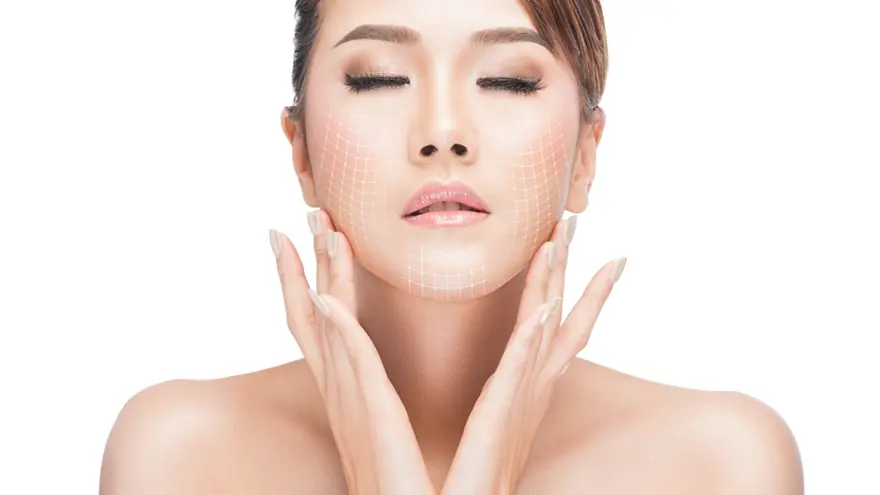
Most people who visit our clinic in Gangnam don’t arrive asking for a specific procedure. They come in with a feeling — “My face looks heavier than before,” or “My jawline used to look sharper,” or “I’m starting to look tired, but I can’t pinpoint why.”
Choosing the right facial contouring approach isn’t actually about selecting a technique. It’s about understanding what’s changing beneath the skin, and then choosing the most precise, least invasive method to restore balance.
At Sinsang Plastic and Reconstructive Surgery, this is where we begin every consultation: by looking deeper, often literally, using 3D analysis and high-resolution ultrasound to understand the real structures contributing to a patient’s concerns.
Below, I’ll walk you through how we — as surgeons — determine the best facial contouring option for each unique face, and how you can use the same framework to make confident, safe decisions.
The Quiet Truth About Facial Contour Changes
Facial aging rarely announces itself loudly. It shifts slowly, the way the wooden beams of a traditional hanok quietly relax over decades. One day, the lines simply aren’t as clean as before.
The most common structural changes we see are:
- Loosening of the SMAS layer (your face’s supportive framework)
- Descent of midface fat pads
- Accumulation of deep fat under the chin or along the jaw
- Changes in bone projection, especially the chin and jawline
- Skin quality reduction due to collagen loss
Patients often assume the issue is fat, or skin, or bone — but in most cases, it’s a combination. And that’s exactly why choosing the correct procedure is so important.
Step 1: Identify Where Your Facial Volume Is Moving
What many patients don’t realize is that two people with the same concern — say, a “blurry jawline” — can have completely different internal causes.
At Sinsang, we evaluate:
1. Skin thickness and elasticity
Thinner skin ages differently than thicker Korean skin types. Thin skin often needs structural support; thick skin sometimes needs targeted volume reduction.
2. Superficial vs. deep fat compartments
Deep fat shifting is a major cause of facial heaviness. If a surgeon only removes superficial fat, the result may be subtle or short-lived.
3. SMAS tension and laxity
If the SMAS layer has weakened, no amount of fat removal will restore a sharp contour. This is where lifting procedures, not liposuction, become essential.
4. Chin and jawbone projection
A small chin can make the entire face look fuller. Sometimes the right solution isn’t removing—but adding, through implants or fillers.
5. Neck muscle and fat patterns
Neck contouring fails most often because the deeper structures — like subplatysmal fat or digastric muscles — were never evaluated. We check these with ultrasound during consultation.
This analysis tells us what category of contouring procedure will be most effective.
Step 2: Match Your Facial Type to the Right Procedure Category
Here are the most common scenarios we see, and how we guide patients toward the right option — with honesty and precision.
Scenario A: “My face looks heavier even though my weight is stable.”
Likely cause: Deep fat descent, weakened SMAS, early jowling.Often mistaken for: Needing cheek fat removal or weight loss.Most effective approach:
SMAS-based Facelift or Mini-Lift
When heaviness is structural, repositioning is more effective than removal. At Sinsang, our facelifts are tailored according to the patient’s unique SMAS quality — some patients need vertical vector lifting; others need a more oblique approach depending on facial width and ligament strength.
Why this works:
You’re restoring the architecture, not just trimming the surface.
Scenario B: “I want a slimmer lower face.”
Likely cause: Hybrid of muscle activity, fat distribution, and bone shape.
This is a three-layer problem:
1. Masseter hypertrophy → Botox or partial debulking
For patients whose lower face width comes from strong chewing muscles (common in Korea due to diet and genetics), masseter treatment alone can dramatically refine the angle of the jaw.
2. Subcutaneous fat → Precision Buccal Fat Adjustment or Cheek Line Lipo
We rarely remove buccal fat entirely; instead, we adjust or reposition it for long-term harmony. Over-removal leads to hollowing later in life — something we see far too often in revision cases.
3. Bone contour → Chin/jawline augmentation
A small chin can make the lower face appear wider. Subtle reshaping or implant placement rebalances the face without making it “V-shaped” in an unnatural way.
Scenario C: “My double chin won’t go away no matter what I do.”
This is one of the most misunderstood concerns.
A double chin can result from:
- Submental fat
- Deep (subplatysmal) fat
- Low hyoid bone position
- Platysma banding
- Weak chin projection
If a surgeon only treats one layer, results are unpredictable.
Best approach:
Neck Liposuction + Platysma Tightening or Deep Plane Neck Contouring, depending on evaluation.
At Sinsang, we use ultrasound to confirm whether deep fat exists — because you cannot address deep fat with standard liposuction. If present, we use a layered surgical method similar to what we use in full neck lifts.
This is also where regenerative stem cell therapy often plays a role, improving skin contraction and healing quality.
Scenario D: “My jawline used to be sharp, but now it looks soft.”
This often signals ligament laxity — the “holding points” of the face loosening.
Most effective approach:
Lower Face Lift, Jawline Liposculpture, or a Hybrid Lift combining repositioning and selective fat sculpting.
Patients fear looking “pulled.” But a properly executed lift restores tension along the natural vector of the face — not sideways, not backwards, but up and slightly vertical, echoing how the face looked when younger.
To be honest, what many patients think of as a “facelift look” is actually the result of poor SMAS handling or excessive skin trimming. Natural-looking lifts come from deep-layer technique, not surface manipulation.
Step 3: Consider Your Healing Style and Longevity Goals

Choosing the right procedure isn’t just about anatomy — it’s about what you expect from the process.
If you prefer minimal downtime:
- Masseter reduction
- Chin filler
- Submental liposuction
- Ultrasound-guided fat reduction therapies
If you want long-term structural change:
- SMAS facelift
- Deep-plane neck contouring
- Chin/jaw augmentation
- Fat grafting with stem cell enrichment
If you prioritize gradual, natural change:
Many of our patients prefer a series of small refinements rather than one dramatic transformation. Combining micro-liposculpture, regenerative therapy, and subtle volume correction can sculpt the face gently over time.
Step 4: Look for Precision — Not Promises
Facial contouring is not about “slimming the face” or “sharpening the jaw.” It’s about restoring balance in the most anatomically respectful way.
Here’s what we believe every patient deserves during consultation:
1. 3D imaging of facial proportions
This reveals how your face aligns in multiple planes — frontal, oblique, lateral — and where asymmetries lie.
2. Ultrasound evaluation of soft tissue layers
We use this for almost all facelift and neck procedures. It tells us:
- how thick your SMAS is
- whether deep fat exists
- if the platysma is separated
- where volume has shifted
Without this step, planning is guesswork disguised as expertise.
3. Clear surgical rationale
A surgeon should be able to explain — simply and calmly — why a specific method fits your anatomy.
4. A conservative philosophy
Over-removal is the enemy of longevity. Under-removal is the enemy of satisfaction. The right balance comes from experience, not aggressiveness.
The Role of Regenerative Medicine in Contouring
At Sinsang, our in-house stem cell laboratory allows us to enhance many contouring procedures with regenerative therapy — not for marketing, but because it helps tissue heal better and age more gracefully.
Stem cell–enriched fat grafting, for example:
- improves graft survival
- enhances skin quality
- reduces postoperative inflammation
- helps create a more youthful, elastic surface
It isn’t a magic wand, but as part of a holistic approach, it can make results more natural and more durable.
So, How Do You Choose the Right Procedure?
Here is the simplest, most honest answer I can give:
You choose the right procedure by understanding the exact structures responsible for your concern — not by choosing a procedure first.
This is why surgeon-led evaluation matters more than trends, buzzwords, or photos online.
If you sit down in a consultation and the surgeon doesn’t:
- study your face from multiple angles
- evaluate deep vs superficial layers
- check the SMAS and platysma
- discuss how your tissues will behave in 5–10 years
- offer a tailored plan unique to your anatomy
— then you’re not getting the level of care your face deserves.
Final Thoughts
If you’re beginning to explore facial contouring, or if something about your facial balance has quietly shifted, it may be time for a proper diagnostic evaluation.
At Sinsang Plastic and Reconstructive Surgery in Gangnam, our approach blends surgical expertise with regenerative science, 3D analysis, and ultrasound-guided planning. It’s not about selling a procedure — it’s about revealing what your face truly needs, and choosing the most precise, natural, and long-lasting solution.
If you’d like a personalized assessment, we would be glad to help you understand your options in a calm, thoughtful consultation setting.
Clinical Guidance & Recovery Considerations
All surgical and non-surgical treatments carry potential risks such as temporary swelling, bruising, asymmetry, or infection depending on individual anatomy. Detailed indications and personalized recovery expectations are confirmed during in-person ultrasonic evaluation with a Sinsang board-certified specialist.
Patient Concierge
Gangnam Station / Sinsa Area · 150 Dosan-daero 5F–6F, Seoul
Mon–Thu 10:00–19:00 · Fri 10:00–21:00 · Sat 10:00–17:00
Online Inquiry Form →WhatsApp (+1 201-940-3238)LINE (@853akazy)CONTINUE EXPLORING
More Medical Insights

Rising Demand for Double Chin Revision Surgery: Korean Market Price Trends
Rising Demand for Double Chin Revision Surgery: Korean Market Price Trends
Explore →

What is fat grafting - Procedure, Uses, Types, Benefits, and Risks
What is fat grafting - Procedure, Uses, Types, Benefits, and Risks
Explore →

Why 9,000 Global Patients Chose Seoul for Specialized Neck Contouring Surgery
Why 9,000 Global Patients Chose Seoul for Specialized Neck Contouring Surgery
Explore →
INTERNATIONAL CONCIERGE · GANGNAM, SEOUL
Begin Your Personalized Surgical Plan With Sinsang Specialists
Share your goals online or connect directly via our official WhatsApp or LINE concierge for pre-travel assessment and scheduling.