
CLINICAL ARTICLE
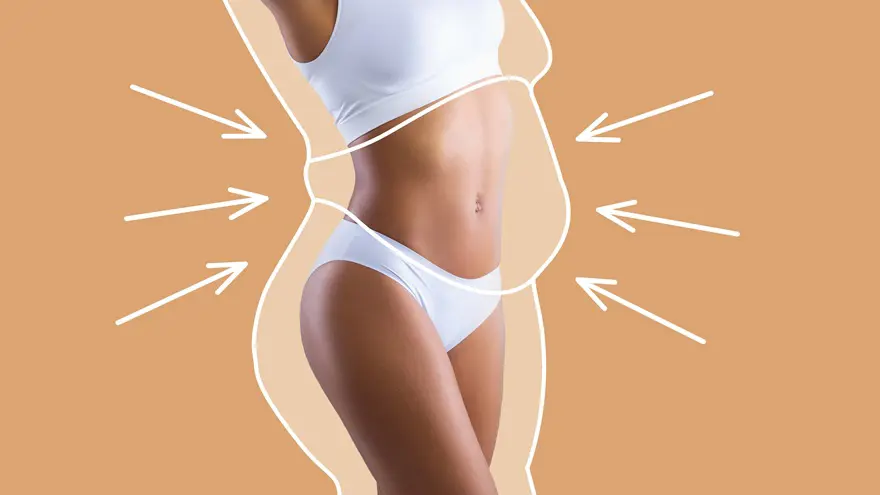
How Much Fat Can Be Safely Removed with Liposuction?
Learn how much fat can be safely removed with liposuction, including expert guidelines, safety limits, and what to expect from the procedure. Explore now!
How Much Fat Can Be Safely Removed with Liposuction?
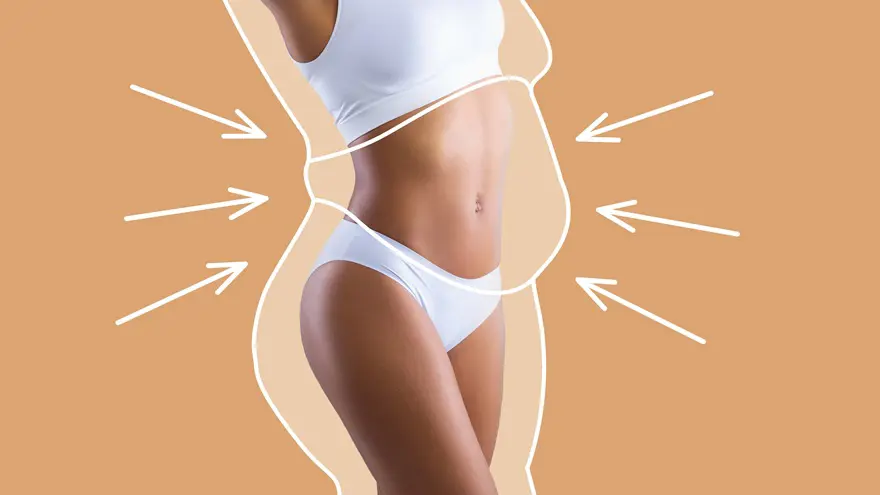
On most consultation days, someone will sit across from us — sometimes a local office worker from Apgujeong, sometimes a patient who has flown in overnight from Singapore — and ask with a kind of hopeful whisper:
“How much fat can you remove… safely?”
It’s an understandable question. Liposuction is one of the most transformative contouring procedures we perform at Sinsang, but it’s also one that requires careful, medically grounded planning. And to be honest, the real answer is more nuanced than any single number you may have seen online.
In Korea, especially in Gangnam where aesthetic expectations are extremely high, patients often imagine liposuction as something like sculpting clay — just remove enough material until the shape looks right. But the human body isn’t clay. It’s a living, responsive system with fluid balance, vascular networks, and variable fat compartments. Removing too much fat doesn’t make the result better; it makes the body unstable.
So let’s walk through what determines safe fat removal, why there’s no universal rule, and how we approach safety and precision at Sinsang.
Why There Is No Single “Safe Number” for All Patients?
For years, many countries referenced a loose guideline of 5 liters as the threshold for “large-volume” liposuction. But the truth is — this number is far too simplistic.
Some patients can safely tolerate more than 5 liters, while for others, even 2–3 liters requires careful monitoring.
The reason is this:
Liposuction isn’t just fat removal. It's fluid shifts, metabolic stress, and tissue trauma. The amount that can be safely extracted depends on:
- Body size and body fat distribution-Hemoglobin levels and vascular tone-Skin elasticity and structural support layers-Presence of deep fat compartments or fibrous fat-Patient’s medical history, medications, liver function, and healing capacity What many patients don’t realize is that the body loses not just fat but also fluid volume during liposuction. If that fluid balance tips too far, blood pressure can fall, leading to dangerous complications. That’s why experienced plastic surgeons — especially those trained in reconstructive and academic settings — don’t make decisions based on arbitrary limits, but on individualized physiology.
How Surgeons Actually Calculate Safe Fat Removal?
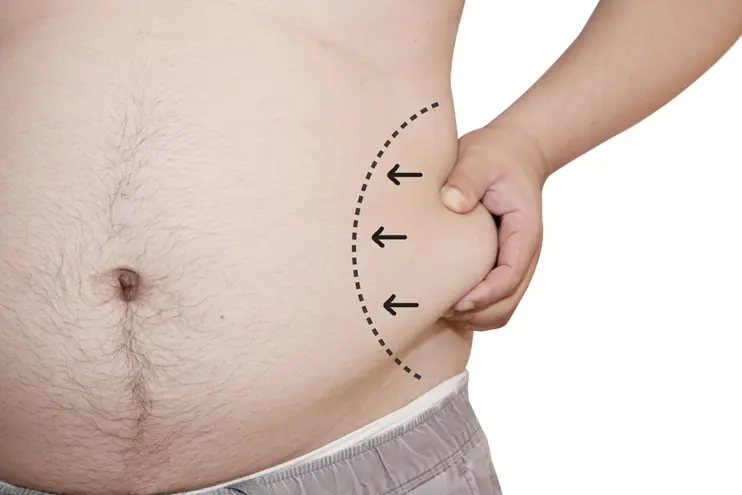
Here’s something we often explain during preoperative planning:
We don’t begin a liposuction surgery by deciding how much fat we want to remove.
We begin by determining how much fat the patient can safely tolerate losing.
At Sinsang, the calculation typically involves:
1. Total Body Weight and Fat Percentage
A 160-cm, 48-kg patient has a completely different metabolic window than a 175-cm, 90-kg patient. Larger individuals naturally have greater intravascular volume and can tolerate larger fluid shifts.
2. Preoperative Bloodwork (Hemoglobin, Hematocrit, Electrolytes)
If hemoglobin is on the lower end, we plan for more conservative removal. This is common in women in their 20s–40s, especially in Korea.
3. Tumescent Fluid Ratios
The tumescent solution allows fat to be removed with minimal bleeding. But too much solution becomes unsafe, and too little increases bleeding. The balance depends on the anatomical zone and the patient’s vascular density.
4. Fat Compartment Depth
Superficial fat can be removed safely in controlled amounts, but deep fat removal — especially in the abdomen or flanks — influences structural stability. Over-aggressive suctioning in the deep compartment is what leads to contour irregularities and over-thinning.
5. Ultrasonic or 3D Diagnostic Imaging (Used at Sinsang)
Something we rely on at the clinic — which many patients appreciate — is ultrasonic fat-depth analysis.
It tells us exactly how thick each fat layer is before surgery.
This prevents “guessing” and helps us design safe extraction zones.
The General Guidelines — When Appropriately Interpreted
Although individualization is essential, most international surgical societies consider 3–5 liters of aspirate (fat + fluid) a standard range for routine liposuction in healthy adults.
Here’s what those numbers actually mean:
Up to 3 L
- Usually extremely safe when performed by a board-certified specialist
- Common for targeted areas such as arms, chin, abdomen, or thighs
- Minimal impact on blood volume
3–5 L
- Still safe with proper monitoring
- Typically used for multi-area liposuction
- Requires close attention to hydration and postoperative care
More than 5 L
- Considered large-volume liposuction
- Requires strict patient selection
- Fluid monitoring, sometimes overnight care
- Done only in specialized facilities with proper anesthesia and postoperative monitoring
- At Sinsang, this is offered selectively and only after thorough diagnostics
The key is that higher volume does not equal better results.
Many patients who think they need 6–8 liters removed actually achieve far better contouring with 2–3 liters when the surgeon targets the right compartments.
Why Removing Too Much Fat Can Be Dangerous?
To be transparent, liposuction becomes unsafe not because of the fat itself, but because of the physiological changes around it.
1. Blood Pressure Instability
Removing too much fluid causes hypotension — a risk that increases exponentially with volume.
2. Increased Surgical Trauma
Every additional liter means more cannula passes, more tissue disruption, and slower healing.
3. Higher Risk of Contour Irregularities
When aggressive suction collapses natural fat compartments, the skin eventually lies unevenly — especially in the abdomen, thighs, and back.
4. Prolonged Recovery
Large volumes can increase inflammation and fibrosis.
5. Increased Risk of Anesthesia Complications
Longer surgeries = greater risks.
This is why our philosophy at Sinsang is not “remove as much as possible,” but remove what creates the best contour while preserving tissue health.
How Korean Aesthetic Culture Influences Safe Volume Planning?
In Korea, especially in Gangnam, most patients prefer natural, clean, athletic lines rather than dramatic hollowing. People often say:
“I want to look refined, not like I overdid something.”
Because of this cultural preference, we often focus on:
- reshaping the waistline
- improving silhouette transitions
- addressing deep fat pockets that distort proportion
Rather than attempting to hollow areas aggressively.
This allows for lower extraction volumes while achieving more elegant results.
The Role of Skin Quality, Age, and Elasticity
One of the most overlooked factors in safe fat removal is skin elasticity.
Younger patients tolerate volume reduction well because the skin retracts smoothly.
But as we age — especially into our late 40s, 50s, and 60s — the skin behaves more like a hanok frame that has slowly loosened over time. Remove too much supporting volume and the structure doesn’t sit smoothly; it collapses.
This is where Sinsang’s expertise in regenerative stem cell therapy becomes important.
For patients who need more fat removed but also require skin tightening, stem cell–rich fat grafting and regenerative treatments help maintain elasticity and promote smoother outcomes.
How We Approach Liposuction Safety at Sinsang?
Our practice is built on precision, diagnostics, and surgeon responsibility.
1. Surgeon-Led Planning
Every case is evaluated directly by the operating surgeon — not a coordinator.
We map fat layers, examine tissue behaviors, and determine safe extraction zones.
2. Ultrasonic Fat Depth Analysis
We measure the thickness of superficial and deep layers to avoid over-resection.
3. Controlled, Layer-Based Liposuction
We preserve structural layers that maintain skin support.
This prevents rippling and reduces recovery time.
4. Regenerative Support
For patients with thin or aging skin, we incorporate stem cell–enriched therapies to improve healing and outcome longevity.
5. Conservative, Artful Sculpting
At high-volume Korean clinics, some patients request aggressive fat removal because they think more is better. But in reality, precision — not quantity — produces beautiful contours.
So… How Much Fat Should Be Removed?
If you’re expecting the answer to be a simple number, I’ll be honest:
it depends — and that’s exactly why safe liposuction requires a surgeon with strong anatomical judgment.
But here’s a guideline that most patients find reassuring:
For most healthy adults, 2–4 liters is enough to achieve excellent contouring, and doing more rarely improves aesthetics.
If more than 5 liters is being proposed, it should only be done in a highly controlled medical environment with experienced surgeons and proper monitoring.
At Sinsang, our average volume per session ranges from 1.5 to 3.5 liters, depending on the patient’s goals and anatomy. In select cases, we go higher — but only when diagnostics and physiology support it.
The Better Question to Ask: “What Is the Right Volume for My Body?”
During consultations, we often gently redirect the conversation.
Instead of fixating on liters, we ask patients:
- What silhouette are you hoping to achieve?
- Which areas feel disproportionate?
- How does your skin respond when you pinch or tension it?
- What is your lifestyle like — are you active or sedentary?
- Do you prefer a natural curve or a sharper contour line?
The truth is, liposuction is sculpting, not draining.
It’s about harmony, balance, and anatomy — not liters.
Final Thoughts: Safety Comes from Precision, Not Volume
If you’re exploring liposuction — whether for a small refinement or a more comprehensive contouring — the most important thing isn’t how much fat can be removed.
It’s how safely and artfully it can be done.
At Sinsang Plastic and Reconstructive Surgery, our aim is always the same:
A beautiful, stable result that ages gracefully with your body.
If you’re considering liposuction and want to understand what volume is appropriate for your anatomy, a consultation with a board-certified surgeon who uses advanced diagnostics — such as ultrasonic imaging and surgeon-led planning — will give you the clearest, safest direction.
We’re here in Gangnam if you’d like help navigating your options with clarity and confidence.
Clinical Guidance & Recovery Considerations
All surgical and non-surgical treatments carry potential risks such as temporary swelling, bruising, asymmetry, or infection depending on individual anatomy. Detailed indications and personalized recovery expectations are confirmed during in-person ultrasonic evaluation with a Sinsang board-certified specialist.
Patient Concierge
Gangnam Station / Sinsa Area · 150 Dosan-daero 5F–6F, Seoul
Mon–Thu 10:00–19:00 · Fri 10:00–21:00 · Sat 10:00–17:00
Online Inquiry Form →WhatsApp (+1 201-940-3238)LINE (@853akazy)CONTINUE EXPLORING
More Medical Insights

Rising Demand for Double Chin Revision Surgery: Korean Market Price Trends
Rising Demand for Double Chin Revision Surgery: Korean Market Price Trends
Explore →

What is fat grafting - Procedure, Uses, Types, Benefits, and Risks
What is fat grafting - Procedure, Uses, Types, Benefits, and Risks
Explore →

Why 9,000 Global Patients Chose Seoul for Specialized Neck Contouring Surgery
Why 9,000 Global Patients Chose Seoul for Specialized Neck Contouring Surgery
Explore →
INTERNATIONAL CONCIERGE · GANGNAM, SEOUL
Begin Your Personalized Surgical Plan With Sinsang Specialists
Share your goals online or connect directly via our official WhatsApp or LINE concierge for pre-travel assessment and scheduling.