
CLINICAL ARTICLE
Customized Scar Treatment: Tailored Solutions for Each Skin Type
Explore customized scar treatment options designed for every skin type. Get tailored solutions that work best for you—book a consultation to start today!
Customized Scar Treatment: Tailored Solutions for Each Skin Type

Most patients don’t come to us saying, “I want perfect skin.”
They say something more specific — and more honest.
“I had surgery years ago, but the scar still bothers me.”
“My acne healed, but it left marks that makeup can’t hide.”
“I scar easily. I’m afraid of making it worse.”
To be honest, scars are rarely just a surface issue. They carry memory — of surgery, injury, inflammation, or even a time in life a patient would rather move past. And from a medical perspective, scars are not uniform problems with uniform solutions.
One of the most common mistakes in scar treatment is assuming that all scars — and all skin — respond the same way.
At Sinsang Plastic and Reconstructive Surgery, we approach scar treatment the way we approach surgery itself:
with diagnosis first, customization always, and long-term tissue health as the goal.
Because effective scar management is not about erasing marks overnight. It’s about understanding why a scar formed the way it did — and how that specific skin type heals.
Why Scars Behave Differently: It Starts with Biology, Not Appearance
Two patients can undergo the same procedure, with the same incision, closed by the same surgeon — and heal very differently.
This is not coincidence.
Scar formation is influenced by:
- Genetic collagen response-Skin thickness and elasticity-Melanin activity-Inflammatory tendency-Blood supply and microcirculation-Mechanical tension at the wound site
In Korean and East Asian skin types especially, we often see a paradox:
- Skin that ages gracefully
- But reacts strongly to inflammation or trauma
This is why scar treatment must be skin-type specific, not device-driven.
Understanding Scar Types Before Choosing Treatment
Before discussing solutions, it’s essential to understand what kind of scar we are treating. This diagnostic step is often rushed — but it determines everything.
Common Scar Categories
- Hypertrophic scars – raised, thickened, confined to wound borders
- Keloid scars – overgrown scars extending beyond the original wound
- Atrophic scars – depressed scars, common after acne
- Pigmented scars – discoloration without major textural change
- Contracture scars – scars that restrict movement or distort anatomy
But classification alone is not enough.
At Sinsang, we go further — evaluating scar age, depth, vascularity, tension vectors, and surrounding tissue quality using both visual assessment and imaging when needed.
Skin Type Matters More Than Scar Size
One of the most important — and least discussed — factors in scar treatment is skin behavior, not skin color alone.
Thicker, Sebaceous Skin
Often seen in:
- Lower face
- Jawline
- Chest and back
This skin type tends to:
- Produce stronger collagen
- Be more prone to hypertrophic scarring
- Respond well to controlled energy and pressure modulation
Thinner, Delicate Skin
Common in:
- Eyelids
- Neck
- Inner arms
This skin:
- Scars less aggressively
- But shows textural irregularities more easily
- Requires gentler, regenerative-focused approaches
Highly Pigment-Responsive Skin
Many Asian patients fall into this category.
Here, inflammation control is critical. Even successful scar flattening can be undermined by post-inflammatory hyperpigmentation if treatment is too aggressive.
This is why “one laser fits all” approaches often fail.
Early Intervention: When Scar Treatment Truly Begins

What many patients don’t realize is that scar treatment starts before a scar fully forms.
The first 3–6 months after injury or surgery are a window of opportunity:
- Collagen is still remodeling
- Blood supply is active
- Tissue behavior can be guided
At our clinic, post-surgical scar protocols may include:
- Tension-minimizing closure techniques
- Early regenerative support
- Controlled anti-inflammatory strategies
This is one advantage of a surgeon-responsibility model — the same team that performs surgery plans scar prevention from day one.
Energy-Based Treatments: Precision Over Power
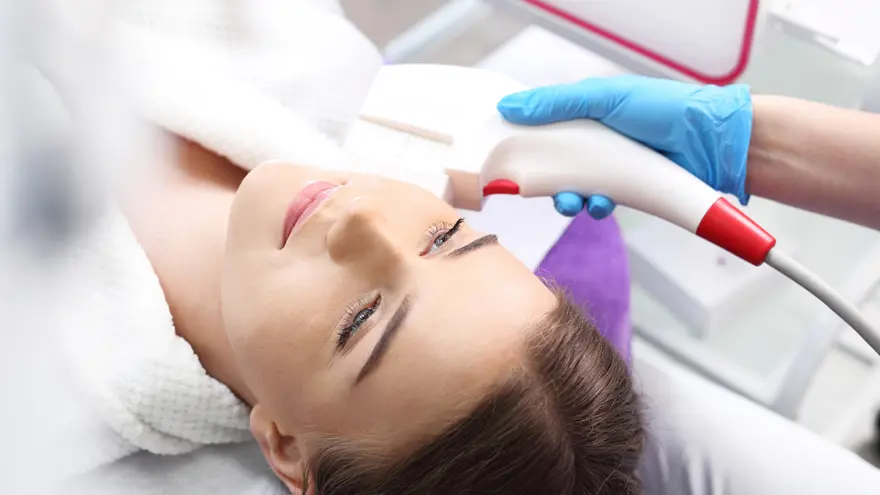
Lasers and energy devices are powerful tools — but only when matched correctly to skin type and scar biology.
Vascular-Targeted Energy
Useful for:
- Red, active scars
- Early hypertrophic changes
By calming abnormal blood vessel activity, we can reduce:
- Scar redness
- Collagen overproduction
- Long-term thickening
Fractional Remodeling
Effective for:
- Atrophic acne scars
- Textural irregularities
However, in pigment-prone skin, depth and density must be carefully calibrated to avoid secondary discoloration.
At Sinsang, we rely on experience-informed parameter selection, not preset device programs. This distinction matters more than the machine itself.
Injectable Scar Modulation: Small Adjustments, Big Impact
Injectables are not only for volume or wrinkles.
In scar management, they can:
- Soften excessive collagen
- Improve elasticity
- Restore depressed tissue planes
For raised scars, carefully dosed agents can reduce rigidity.
For atrophic scars, structural support can be rebuilt gradually.
The key is timing and restraint. Overcorrection can make scars more noticeable — especially in mobile areas like the face.
Regenerative Therapy: Improving How Skin Heals, Not Just How It Looks

This is where scar treatment shifts from correction to transformation.
Scars are, at their core, a record of how skin healed. If healing quality improves, scars improve — even years later.
Stem Cell–Based Regenerative Approaches
With access to an in-house stem cell laboratory, our clinic focuses on:
- Enhancing tissue regeneration
- Improving collagen organization
- Supporting microvascular repair
Regenerative therapy is particularly valuable for:
- Surgical scars with stiffness
- Acne scars resistant to lasers
- Patients with poor healing history
Rather than forcing change, we encourage skin to repair itself more intelligently.
Scar Revision Surgery: When Precision Is Required
Not all scars can be treated non-surgically.
In some cases:
- Scar direction is unfavorable
- Tension is constant
- Previous healing was poorly aligned
Surgical scar revision is not about “cutting again” — it’s about:
- Reorienting tension
- Resetting healing conditions
- Combining surgery with preventive scar protocols
Because we perform high-volume reconstructive and aesthetic surgery, we understand exactly which scars benefit from revision — and which do not.
Cultural Perspective: Scar Sensitivity in Korea
In Korea, scars are often perceived differently than in Western cultures. Even subtle marks can feel socially or personally significant, especially on the face or neck.
This sensitivity has driven Korean aesthetic medicine to prioritize:
- Scar minimization
- Natural blending
- Long-term invisibility rather than short-term improvement
Our patients — both local and international — often choose Gangnam clinics specifically for this level of refinement.
Why Customized Planning Matters More Than Any Single Treatment
Patients sometimes ask:
“What is the best treatment for scars?”
The honest answer is:
There isn’t one.
There is only the right combination, at the right time, for the right skin.
At Sinsang Plastic and Reconstructive Surgery, every scar plan is:
- Individually diagnosed
- Skin-type adjusted
- Surgeon-led
- Focused on long-term tissue quality
This approach is slower — but more predictable. And in scar treatment, predictability is everything.
A Thoughtful Next Step
If a scar continues to concern you — whether from surgery, acne, or injury — it doesn’t mean you waited too long or that nothing can be done.
It means the scar deserves proper evaluation, not a generic solution.
A consultation with a board-certified plastic surgeon who understands skin behavior, regenerative healing, and surgical anatomy can clarify what options truly make sense for your skin.
At Sinsang Plastic and Reconstructive Surgery, we believe scars should soften into the background of your life — not define how you see yourself. With the right strategy, tailored carefully to your skin, that goal is often closer than patients expect.
Clinical Guidance & Recovery Considerations
All surgical and non-surgical treatments carry potential risks such as temporary swelling, bruising, asymmetry, or infection depending on individual anatomy. Detailed indications and personalized recovery expectations are confirmed during in-person ultrasonic evaluation with a Sinsang board-certified specialist.
Patient Concierge
Gangnam Station / Sinsa Area · 150 Dosan-daero 5F–6F, Seoul
Mon–Thu 10:00–19:00 · Fri 10:00–21:00 · Sat 10:00–17:00
Online Inquiry Form →WhatsApp (+1 201-940-3238)LINE (@853akazy)CONTINUE EXPLORING
More Medical Insights

Rising Demand for Double Chin Revision Surgery: Korean Market Price Trends
Rising Demand for Double Chin Revision Surgery: Korean Market Price Trends
Explore →

What is fat grafting - Procedure, Uses, Types, Benefits, and Risks
What is fat grafting - Procedure, Uses, Types, Benefits, and Risks
Explore →

Why 9,000 Global Patients Chose Seoul for Specialized Neck Contouring Surgery
Why 9,000 Global Patients Chose Seoul for Specialized Neck Contouring Surgery
Explore →
INTERNATIONAL CONCIERGE · GANGNAM, SEOUL
Begin Your Personalized Surgical Plan With Sinsang Specialists
Share your goals online or connect directly via our official WhatsApp or LINE concierge for pre-travel assessment and scheduling.