

CLINICAL ARTICLE
Chin Fat vs. Jowl Fat: Different Issues, Different Treatments
Chin fat and jowl fat aren't the same—discover the key differences and the best treatments for each. Get expert insight for a defined look. Learn more today!
Chin Fat vs. Jowl Fat: Different Issues, Different Treatments
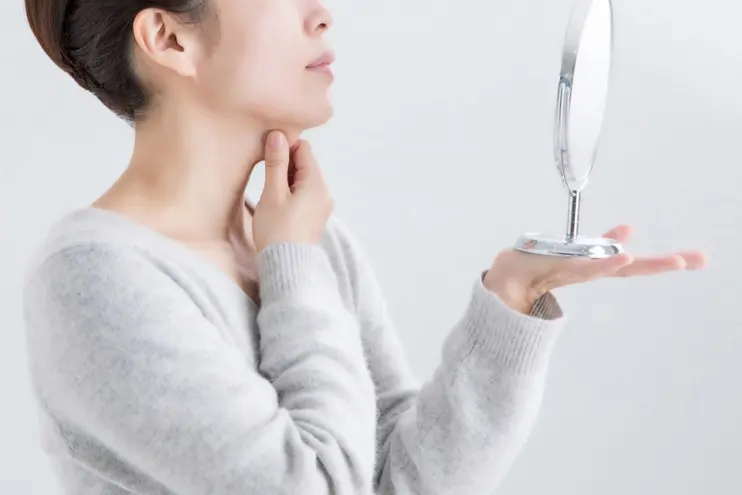
Many patients come in saying the same thing — but pointing to different places.
“I have fat here.”
“I feel heavy here.”
“I look older here.”
They gesture under the chin. Or along the jawline. Sometimes both.
From the outside, chin fat and jowl fat can look similar. They both soften the lower face. They both blur definition. And they both tend to show up in photos before you notice them in the mirror.
But surgically and anatomically, they are very different problems.
At Sinsang Plastic and Reconstructive Surgery in Gangnam, one of the most important parts of lower-face consultation is explaining this distinction — because treating chin fat like jowl fat (or vice versa) is one of the most common reasons results fall short.
Let’s slow this down and look at why these two areas age differently, behave differently, and require entirely different treatment strategies.
Why the Lower Face Ages in Zones, Not All at Once
The lower face is not a single unit.
It’s a layered structure made up of:
- Bone (mandible, chin projection)
- Deep fat compartments
- Superficial fat pads
- Muscle (platysma, depressor muscles)
- Ligaments and skin
Each of these ages at a different pace.
What many patients don’t realize is this:
Not all “fat” in the lower face is excess.
Some fat is misplaced. Some is unsupported. Some is compensating for deeper changes.
Understanding which is which determines the correct treatment.
Chin Fat (Submental Fat): A Volume and Position Issue
What Chin Fat Really Is?
Chin fat — medically called submental fat — sits beneath the chin, above the neck structures.
It is influenced by:
- Genetics
- Weight fluctuation
- Chin projection
- Neck angle
- Muscle tone
Importantly, chin fat can appear even in slim patients. This is why “losing weight” often doesn’t solve it.
Why Chin Fat Blurs Definition?
Submental fat fills the angle between the chin and the neck — the cervicomental angle.
When this angle softens:
- The jawline loses separation from the neck
- The face looks heavier from the front
- The profile looks shorter and less defined
This is primarily a volume and contour issue, not a sagging one.
Best Treatments for Chin Fat

Chin fat responds well to reduction-based treatments, because the skin in this area usually has reasonable elasticity.
Common approaches include:
- Targeted liposuction
- Fat-dissolving injections (in selected cases)
- Chin projection enhancement (to improve angles)
- Adjunctive skin tightening if needed
What matters most is precision.
Over-reduction can make the neck look hollow or aged. Under-treatment leaves the angle unchanged. This balance requires surgical judgment — not just removing fat.
Jowl Fat: A Structural Aging Problem
What Jowl Fat Actually Is (And Isn’t)?
Here’s a critical point many patients don’t hear clearly enough:
Jowls are not simply “extra fat.”
Jowl fullness is caused by a combination of:
- Descending fat pads from the midface
- Ligament laxity
- Weakening of the jawline retaining structures
- Skin laxity
- Sometimes muscle activity pulling downward
The fat that creates jowls was often previously in a good position.
It didn’t increase — it migrated.
This is why trying to “dissolve” jowls often leads to disappointing or even aging results.
Why Jowl Fat Can’t Be Treated Like Chin Fat?
This is where many non-surgical approaches fail.
If you remove volume from jowls without addressing support:
- The jawline can look deflated
- Skin can sag more
- Facial balance worsens
- The face may look older, not slimmer
Jowls are primarily a support and repositioning problem, not a reduction problem.
Best Treatments for Jowl Fat
Effective jowl treatment focuses on lifting, repositioning, and redefining, not simply removing fat.
Depending on severity, options may include:
- Structural fillers placed strategically (not in the jowl itself)
- Energy-based tightening (in carefully selected cases)
- Surgical lifting of deeper layers (SMAS-focused approaches)
- Jawline support to restore definition
- Neck evaluation, because jowls and neck aging are linked
At Sinsang, we often explain jowls using a hanok analogy:
When the foundation beams loosen, the walls sag.
Removing wall material doesn’t fix the structure.
Chin Fat and Jowl Fat Often Coexist — But Need Separate Plans
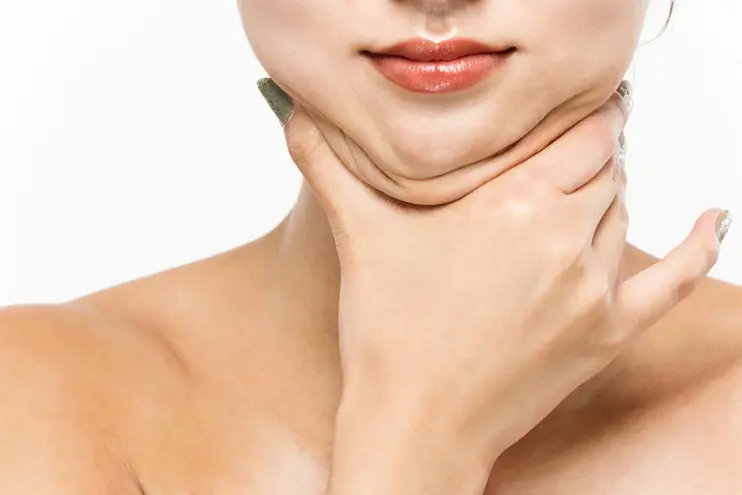
Many patients have both issues.
This is where treatment planning becomes nuanced.
If you:
- Treat chin fat only → jowls may become more obvious
- Treat jowls only → the neck may still look heavy
- Over-treat both → the face can look hollow or pulled
This is why global lower-face assessment matters more than spot treatments.
We evaluate:
- Chin projection
- Jawline continuity
- Neck angle
- Skin elasticity
- Deep vs superficial fat distribution
Only then do we decide what to reduce, what to support, and what to reposition.
Why Fillers Alone Often Fail in the Lower Face?
Patients often ask:
“Can’t I just use filler to fix this?”
Fillers are tools — not solutions.
Used correctly, they can:
- Restore jawline structure
- Improve chin projection
- Support sagging tissue indirectly
Used incorrectly, they can:
- Add heaviness
- Worsen jowls
- Blur contours
- Create unnatural fullness
In male patients especially, overuse of filler in the lower face is one of the fastest ways to lose definition.
The Role of Regenerative and Adjunctive Treatments
In selected cases, regenerative therapies can support:
- Skin quality
- Healing after contouring
- Long-term tissue resilience
But they do not replace:
- Fat reduction where fat is excessive
- Structural lifting where support is lost
This is an important distinction. Regeneration supports results — it does not substitute anatomy.
Why Surgeon-Led Diagnosis Matters Here?
From a clinical standpoint, chin fat and jowl fat sit at the intersection of:
- Aesthetic judgment
- Anatomy
- Aging biology
They are easy to misdiagnose — and hard to correct once treated improperly.
At Sinsang Plastic and Reconstructive Surgery, every lower-face plan is:
- Surgeon-evaluated
- Based on structural anatomy
- Designed for long-term harmony, not quick fixes
Because a sharp jawline is not created by chasing fat —
it’s created by respecting structure.
A Clear Takeaway to Leave You With
If you’re concerned about your lower face, ask yourself this:
- Does the heaviness sit under the chin, blurring the neck angle?
- Or does it sit along the jawline, disrupting definition?
They may look similar — but they are not the same problem.
Chin fat is about reduction.
Jowl fat is about repositioning and support.
Treating them correctly — and differently — is what separates temporary improvement from truly refined, natural-looking results.
If these concerns sound familiar, a consultation with a board-certified surgeon who evaluates the entire lower face — not just isolated areas — can help you understand which issue you’re actually dealing with, and what treatment approach will serve you best over time.
Clinical Guidance & Recovery Considerations
All surgical and non-surgical treatments carry potential risks such as temporary swelling, bruising, asymmetry, or infection depending on individual anatomy. Detailed indications and personalized recovery expectations are confirmed during in-person ultrasonic evaluation with a Sinsang board-certified specialist.
Patient Concierge
Gangnam Station / Sinsa Area · 150 Dosan-daero 5F–6F, Seoul
Mon–Thu 10:00–19:00 · Fri 10:00–21:00 · Sat 10:00–17:00
Online Inquiry Form →WhatsApp (+1 201-940-3238)LINE (@853akazy)CONTINUE EXPLORING
More Medical Insights

Rising Demand for Double Chin Revision Surgery: Korean Market Price Trends
Rising Demand for Double Chin Revision Surgery: Korean Market Price Trends
Explore →

What is fat grafting - Procedure, Uses, Types, Benefits, and Risks
What is fat grafting - Procedure, Uses, Types, Benefits, and Risks
Explore →

Why 9,000 Global Patients Chose Seoul for Specialized Neck Contouring Surgery
Why 9,000 Global Patients Chose Seoul for Specialized Neck Contouring Surgery
Explore →
INTERNATIONAL CONCIERGE · GANGNAM, SEOUL
Begin Your Personalized Surgical Plan With Sinsang Specialists
Share your goals online or connect directly via our official WhatsApp or LINE concierge for pre-travel assessment and scheduling.