

CLINICAL ARTICLE
Can Hyperbaric Oxygen Therapy Improve Skin Texture?
Explore how hyperbaric oxygen therapy can improve skin texture by boosting collagen, circulation, and healing. Reveal smoother, healthier skin—learn more now!
Can Hyperbaric Oxygen Therapy Improve Skin Texture?
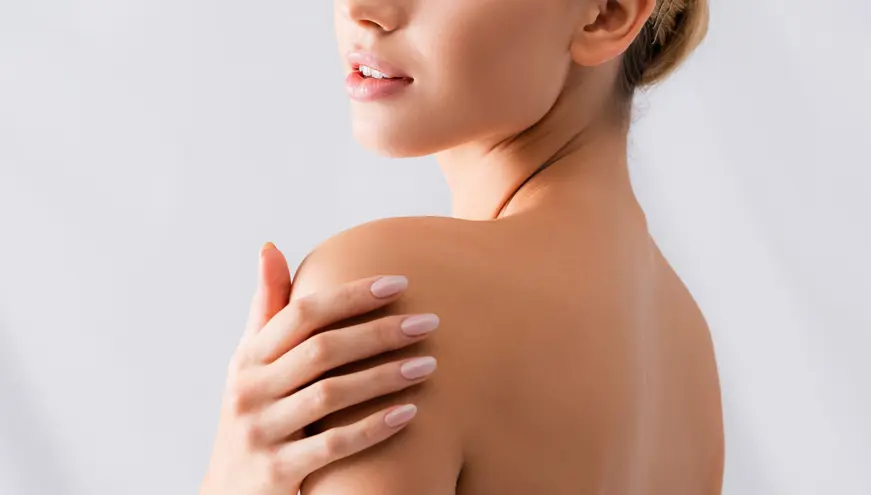
This question usually comes from patients who are already thoughtful and informed.
They are not looking for a miracle.
They are not chasing trends.
They are simply noticing that their skin doesn’t heal, recover, or “settle” the way they expected — even after good treatments.
Often, the question is phrased carefully:
“I’ve heard hyperbaric oxygen helps healing… but does it really do anything for skin texture?”
“Is this medical, or just wellness marketing?”
The skepticism is healthy.
At Sinsang Plastic and Reconstructive Surgery, hyperbaric oxygen therapy (HBOT) is not positioned as a cosmetic treatment in itself. It is used as a physiologic support tool — one that works quietly in the background, improving how skin behaves over time rather than how it looks overnight.
To understand its role, we need to first understand what skin texture actually reflects.
Skin Texture Is a Reflection of Tissue Health, Not Just the Surface
When patients say their skin texture is poor, they may mean many different things:
- The skin looks dull even when hydrated
- Makeup doesn’t sit smoothly
- Redness lingers longer than it used to
- Fine creping appears easily
- Recovery after lasers or procedures feels prolonged
- The skin looks “thin” or fragile
These are not always signs of aging alone.
Very often, they indicate that the skin’s repair mechanisms are underperforming.
Healthy skin texture depends on:
- Adequate oxygen delivery
- Stable microcirculation
- Efficient collagen remodeling
- Controlled inflammation
- Balanced cellular turnover
When any of these processes are compromised, skin texture suffers — even if the epidermis looks intact.
This is where hyperbaric oxygen therapy enters the conversation.
What Hyperbaric Oxygen Therapy Really Does ?
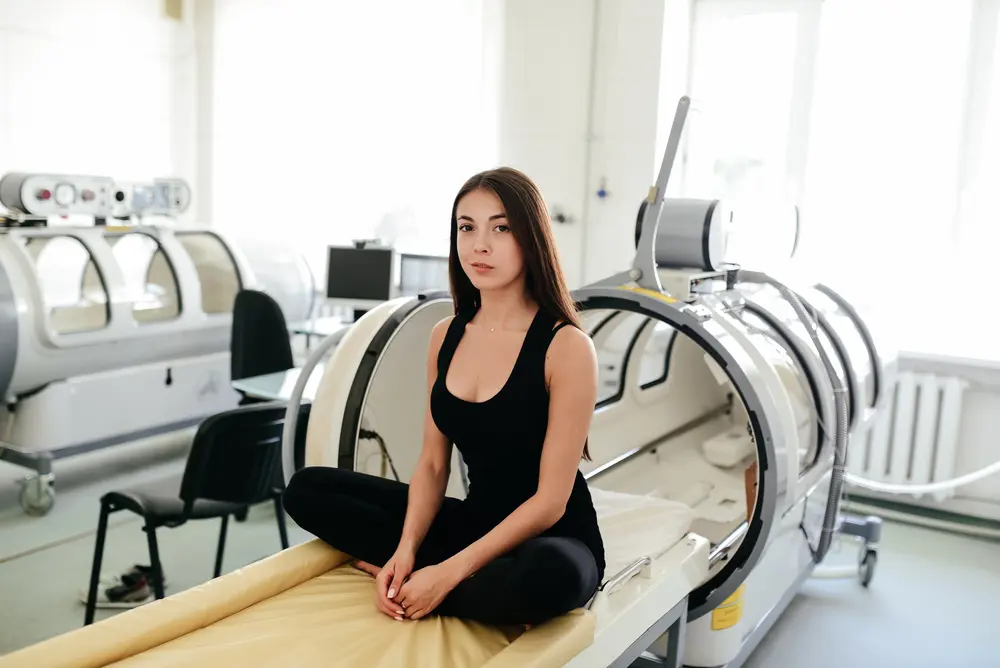
Hyperbaric oxygen therapy involves breathing 100% oxygen in a pressurized chamber, typically at pressures higher than atmospheric levels.
Under these conditions, oxygen dissolves directly into the plasma — not just carried by red blood cells. This allows oxygen to reach tissues with limited or stressed blood supply.
From a medical and surgical perspective, HBOT is known to:
- Increase tissue oxygenation at a cellular level
- Support angiogenesis (new blood vessel formation)
- Reduce inflammatory signaling
- Improve fibroblast activity (cells responsible for collagen production)
- Enhance wound healing and tissue repair
This is why HBOT has long been used in:
- Reconstructive surgery
- Chronic wound management
- Burn treatment
- Post-radiation tissue recovery
Its role in aesthetics is not new — it is simply being applied more thoughtfully.
Why Oxygen Matters So Much for Skin Texture?
Skin is metabolically active tissue.
Even though it looks passive, it is constantly:
- Rebuilding collagen
- Reorganizing elastin
- Managing micro-inflammation
- Repairing daily environmental damage
All of this requires oxygen.
When oxygen delivery is suboptimal — due to inflammation, swelling, vascular compromise, or aging — collagen quality declines. The skin may still produce collagen, but it is poorly organized, leading to roughness, unevenness, and fragility.
HBOT does not “force” skin to improve.
It removes biological limitations that prevent skin from healing optimally.
This distinction is critical.
Where HBOT Shows the Most Meaningful Impact on Skin Texture?
1. Post-Procedure Skin Recovery
This is the clearest and most consistent indication.
After procedures such as:
- Facelift or neck surgery
- Fat grafting
- Laser resurfacing
- RF or ultrasound tightening
- Microneedling or regenerative injections
the skin enters a vulnerable healing phase.
The final texture outcome depends less on the procedure itself and more on:
- How inflammation resolves
- How collagen reorganizes
- How well tissue oxygenation is maintained
HBOT can support this phase by:
- Reducing prolonged redness
- Limiting excessive inflammatory response
- Supporting smoother epithelial regeneration
- Improving graft and tissue integration
Patients often tell us:
“I didn’t just heal faster — my skin healed better.”
That difference is subtle but long-lasting.
2. Fragile or Reactive Skin Types
Some patients are genetically prone to:
- Easy bruising
- Persistent redness
- Post-inflammatory pigmentation
- Delayed recovery after minor procedures
In these cases, the issue is not treatment strength — it is skin resilience.
HBOT can help by stabilizing the healing environment:
- Improving oxygen diffusion
- Reducing oxidative stress
- Supporting capillary health
While it does not change genetics, it can reduce the expression of vulnerability in daily skin behavior.
3. Supporting Regenerative Aesthetic Treatments
At Sinsang, HBOT is sometimes used in conjunction with regenerative therapies, including:
- Fat-derived regenerative treatments
- Stem cell–rich fat grafting
- PRP-supported protocols
Regeneration is energy-intensive. Cells require oxygen to:
- Differentiate
- Produce extracellular matrix
- Integrate transplanted tissue
- Remodel collagen properly
HBOT enhances the environment in which regenerative treatments work. Without adequate oxygen, even the best regenerative techniques underperform.
This is why HBOT is often most effective when paired, not isolated.
Why HBOT Does Not Replace Other Skin Treatments?
It’s important to be very clear about limitations.
Hyperbaric oxygen therapy does not:
- Remove sun damage
- Resurface scarred skin
- Lift sagging tissue
- Eliminate deep wrinkles
- Replace lasers, peels, or surgery
If skin texture issues are caused by:
- Deep structural wrinkles
- Significant volume loss
- Advanced photodamage
HBOT alone will not produce visible correction.
Its role is supportive, not transformative.
Patients who expect glow, tightening, or resurfacing from HBOT alone are often disappointed — not because HBOT failed, but because it was asked to do the wrong job.
Why Results Feel Subtle — and Why That’s Not a Weakness
One of the reasons HBOT is misunderstood is that its benefits are not dramatic.
There is no “before and after” shock.
Instead, patients notice:
- Less irritation after treatments
- More even tone over time
- Better tolerance of procedures
- Improved skin resilience
- Smoother recovery patterns
These changes accumulate quietly.
From a surgeon’s perspective, this subtlety is actually a strength. It means HBOT supports long-term tissue behavior, not temporary cosmetic effects.
How We Decide When to Use HBOT at Sinsang?
We do not recommend HBOT routinely.
We consider it when:
- Skin texture outcomes matter as much as surgical precision
- A patient is undergoing invasive or regenerative procedures
- Healing quality has been problematic in the past
- The goal is longevity, not speed
- The patient values biological optimization over cosmetic shortcuts
Used indiscriminately, HBOT adds little.
Used strategically, it can meaningfully improve how skin ages and heals.
Who Benefits Most From HBOT for Skin Texture?
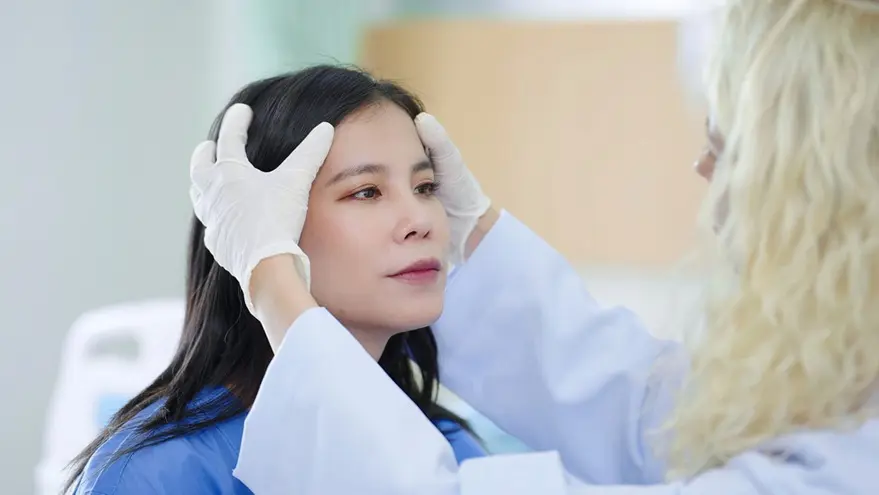
HBOT tends to benefit patients who:
- Are recovering from surgery or aggressive treatments
- Have reactive, inflammation-prone skin
- Are undergoing regenerative therapies
- Want to optimize recovery quality
- Care about long-term skin resilience
It is less beneficial for patients seeking:
- Immediate cosmetic change
- Standalone aesthetic improvement
- Replacement for corrective procedures
Understanding this distinction prevents disappointment.
Why Medical Context Matters?
HBOT offered in non-medical wellness settings often lacks:
- Proper timing
- Understanding of tissue healing phases
- Integration with surgical or regenerative planning
At Sinsang Plastic and Reconstructive Surgery, HBOT is:
- Integrated into surgeon-led treatment plans
- Timed according to biological healing stages
- Used to support outcomes, not inflate expectations
- Combined with regenerative and surgical care when appropriate
This context is what makes the difference between “nice to try” and clinically meaningful.
A Clear, Honest Conclusion
So — can hyperbaric oxygen therapy improve skin texture?
Yes — when poor skin texture is related to healing quality, inflammation, and tissue resilience. No — when structural correction or resurfacing is required.
HBOT is not about changing your face.
It’s about helping your skin behave better over time.
When used thoughtfully, it can make other treatments heal more smoothly, results settle more naturally, and skin age with greater stability.
If you’re considering hyperbaric oxygen therapy, the most important question is not whether it works — but whether it fits into a medically guided, long-term plan.
At Sinsang Plastic and Reconstructive Surgery, we use HBOT not as a promise of transformation, but as a quiet ally to biology — supporting the skin in doing what it is meant to do, only better.
Clinical Guidance & Recovery Considerations
All surgical and non-surgical treatments carry potential risks such as temporary swelling, bruising, asymmetry, or infection depending on individual anatomy. Detailed indications and personalized recovery expectations are confirmed during in-person ultrasonic evaluation with a Sinsang board-certified specialist.
Patient Concierge
Gangnam Station / Sinsa Area · 150 Dosan-daero 5F–6F, Seoul
Mon–Thu 10:00–19:00 · Fri 10:00–21:00 · Sat 10:00–17:00
Online Inquiry Form →WhatsApp (+1 201-940-3238)LINE (@853akazy)CONTINUE EXPLORING
More Medical Insights

Rising Demand for Double Chin Revision Surgery: Korean Market Price Trends
Rising Demand for Double Chin Revision Surgery: Korean Market Price Trends
Explore →

What is fat grafting - Procedure, Uses, Types, Benefits, and Risks
What is fat grafting - Procedure, Uses, Types, Benefits, and Risks
Explore →

Why 9,000 Global Patients Chose Seoul for Specialized Neck Contouring Surgery
Why 9,000 Global Patients Chose Seoul for Specialized Neck Contouring Surgery
Explore →
INTERNATIONAL CONCIERGE · GANGNAM, SEOUL
Begin Your Personalized Surgical Plan With Sinsang Specialists
Share your goals online or connect directly via our official WhatsApp or LINE concierge for pre-travel assessment and scheduling.