
CLINICAL ARTICLE
Best Areas to Target for a V-Line Face Shape
Discover the best areas to target for a V-line face shape, from jawline to cheeks. Achieve a slimmer, defined look—learn expert tips and techniques now!
Best Areas to Target for a V-Line Face Shape

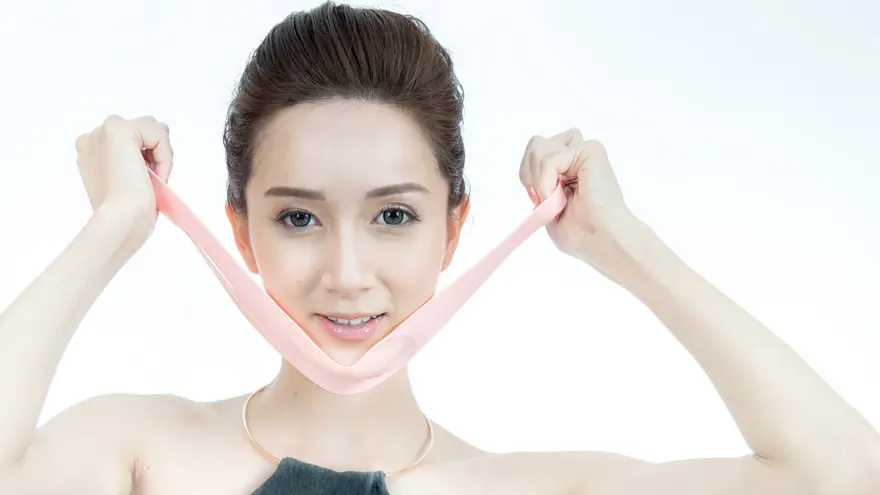
When people talk about wanting a V-line face, what they’re usually reacting to is not one feature — but an overall impression.
They want the face to look:
- Lighter
- Cleaner
- More defined
- More youthful
- More balanced from every angle
And importantly, they want this without looking sharp, artificial, or “done.”
At Sinsang Plastic and Reconstructive Surgery in Gangnam, we often tell patients this early on:
A V-line face is not something you carve out.
It’s something you re-organize.
That distinction matters. Because many unsatisfactory results come from focusing on the wrong area, or treating one part of the lower face in isolation.
Let’s go through this carefully — not as a trend, but as anatomy, aging, and proportion.
First, Reframing the Idea of a V-Line
A true V-line is not a pointed chin.
It is a continuous visual flow from the cheekbones down to the chin, with:
- Gradual narrowing (not sudden angles)
- Clear jawline definition
- Clean separation between face and neck
- Balanced proportions frontally and in profile
When patients say, “I want a smaller face,” what they often mean is:
- Less visual weight in the lower third
- Fewer shadows along the jawline
- A clearer outline when seen from the front or in photos
This is why chasing a single feature — like chin length — almost always fails.
Why the Lower Face Must Be Treated as a System?
The lower face is made up of multiple interacting components:
- Bone structure
- Muscle bulk
- Fat compartments (deep and superficial)
- Ligaments and support structures
- Skin quality and elasticity
Each of these contributes differently to facial width, heaviness, and shape.
A V-line result comes from adjusting relationships between these layers, not aggressively altering any one of them.
1. Jaw Angle (Mandibular Angle): The Foundation of Lower-Face Width

For many patients, the jaw angle is the starting point of a wide or square face.
Why the Jaw Angle Matters So Much?
The mandibular angle defines:
- The width of the lower face
- The strength or softness of facial contours
- How sharply the face transitions into the neck
A prominent jaw angle can come from:
- Naturally wide bone structure
- Enlarged masseter muscles
- Thick soft tissue covering the angle
- A combination of all three
This is especially common in East Asian patients, where jaw width is often structural rather than weight-related.
How Jaw Angle Refinement Contributes to a V-Line?
The goal is not to eliminate the jaw angle.
An overly reduced jaw angle:
- Makes the face look weak or unfinished
- Disrupts harmony with the midface
- Can look especially unnatural as the face ages
Instead, refinement focuses on:
- Softening excessive width
- Reducing bulk where it is disproportionate
- Preserving a natural, supportive contour
This creates the starting point for a V-line — the upper boundary of narrowing.
2. Masseter Muscles: When Width Is Dynamic, Not Fixed
Many patients notice that their face looks wider:
- When clenching
- In the evening
- During stress
- On one side more than the other
This is often due to masseter muscle hypertrophy.
Why Muscle Bulk Changes Face Shape?
The masseter is a powerful chewing muscle. When enlarged, it:
- Pushes the jaw angle outward
- Creates a square or heavy appearance
- Can distort symmetry
Unlike bone, muscle is dynamic — and this makes it one of the most responsive areas for non-surgical contouring.
Why Restraint Is Critical Here?
Reducing masseter bulk can:
- Narrow the lower face
- Soften jaw angles
- Improve symmetry
But over-reduction can:
- Cause chewing fatigue
- Make the face look hollow from the side
- Create imbalance with the chin and midface
In a true V-line plan, masseter reduction is calibrated, not aggressive. It supports the overall narrowing rather than dominating it.
3. Lower Cheek and Jowl Transition: Where Most V-Line Plans Fail
This is the most commonly misunderstood area — and the most important.
Many patients focus on jaw width or chin shape, but ignore the jowl transition zone, where the midface flows into the lower face.
Why Jowls Disrupt the V-Line?
Jowls:
- Break the smooth line from cheekbone to chin
- Create shadows and heaviness
- Make the face look wider at rest
Crucially, jowls are not simply excess fat.
They are usually caused by:
- Descent of facial fat pads
- Ligament laxity
- Loss of structural support
- Skin aging
This is why dissolving fat in the jowl often worsens the problem.
The Correct Way to Address This Area
Effective V-line contouring:
- Supports tissue above the jowl
- Restores continuity of the jawline
- Focuses on repositioning, not hollowing
When this transition is smooth, the lower face automatically looks slimmer — even if no bone or muscle is touched.
4. Submental Area (Under the Chin): The Illusion of Face Size
Even a well-shaped jaw and chin will not look like a V-line if the area under the chin is heavy or blurred.
Why Submental Fullness Matters?
Submental fat or laxity:
- Erases the jawline
- Shortens the face visually
- Makes the lower face appear heavier from the front
Importantly, this is not always weight-related. Many slim patients have genetically predisposed submental fullness.
How This Area Supports a V-Line?
By restoring a clean angle between the chin and neck:
- The jawline becomes more visible
- The face appears longer and slimmer
- The V-shape becomes apparent even without aggressive contouring
The goal is never an overly hollow neck — but clarity of boundary.
5. Chin: Projection, Alignment, and Subtle Tapering
The chin is often treated as the “tip” of the V — but this is where many results go wrong.
Why Length Alone Is a Mistake?
Over-lengthening the chin:
- Looks artificial
- Disrupts facial proportions
- Makes the lower face look bottom-heavy
A true V-line chin is not sharp — it is balanced.
What Actually Matters in Chin Design?
A well-planned chin:
- Projects forward slightly (not downward)
- Narrows subtly toward the tip
- Aligns with the lips and nose in profile
- Supports the jawline laterally
Often, very small adjustments here have a large impact — because the chin anchors the entire lower face visually.
Why a V-Line Cannot Be Achieved by Treating One Area?
This is the most important takeaway.
If you:
- Only reduce jaw width → the chin may look heavy
- Only enhance the chin → the jawline looks unsupported
- Only remove fat → sagging becomes more obvious
A V-line is created by coordination, not exaggeration.
Each area influences how the others are perceived. This is why standardized packages or “one-size-fits-all” approaches rarely succeed.
The Role of Skin Quality and Aging
Even perfect contouring will not hold if the skin cannot support it.
As skin elasticity declines:
- Contours blur
- Definition softens
- Results age poorly
In selected patients, skin-quality and regenerative treatments can:
- Improve elasticity
- Support healing
- Help maintain definition over time
These treatments don’t create the V-line — they help it last.
Why Surgeon-Led Planning Is Essential?

V-line treatments are often marketed as simple or trendy.
In reality, achieving a natural V-line requires:
- Understanding bone, muscle, fat, and skin together
- Anticipating how the face will age
- Knowing when not to treat an area
- Restraint and long-term thinking
At Sinsang Plastic and Reconstructive Surgery, V-line planning is:
- Individualized
- Anatomy-driven
- Designed to look natural from every angle — and every year
Because the most successful V-line is not the sharpest one.
It’s the one that looks like it was always part of your face.
A Final, Honest Takeaway
If you’re considering a V-line face shape, the most important question is not:
“What procedure should I get?”
It’s:
“Where does my face need refinement — and where does it need support?”
A proper consultation with a board-certified surgeon who evaluates the entire lower face as a system can help you understand what kind of V-line is realistic, appropriate, and truly flattering for your anatomy.
Subtle, coordinated changes age better — and look more natural — than dramatic ones.
And in facial contouring, natural always wins.
Clinical Guidance & Recovery Considerations
All surgical and non-surgical treatments carry potential risks such as temporary swelling, bruising, asymmetry, or infection depending on individual anatomy. Detailed indications and personalized recovery expectations are confirmed during in-person ultrasonic evaluation with a Sinsang board-certified specialist.
Patient Concierge
Gangnam Station / Sinsa Area · 150 Dosan-daero 5F–6F, Seoul
Mon–Thu 10:00–19:00 · Fri 10:00–21:00 · Sat 10:00–17:00
Online Inquiry Form →WhatsApp (+1 201-940-3238)LINE (@853akazy)CONTINUE EXPLORING
More Medical Insights

Rising Demand for Double Chin Revision Surgery: Korean Market Price Trends
Rising Demand for Double Chin Revision Surgery: Korean Market Price Trends
Explore →

What is fat grafting - Procedure, Uses, Types, Benefits, and Risks
What is fat grafting - Procedure, Uses, Types, Benefits, and Risks
Explore →

Why 9,000 Global Patients Chose Seoul for Specialized Neck Contouring Surgery
Why 9,000 Global Patients Chose Seoul for Specialized Neck Contouring Surgery
Explore →
INTERNATIONAL CONCIERGE · GANGNAM, SEOUL
Begin Your Personalized Surgical Plan With Sinsang Specialists
Share your goals online or connect directly via our official WhatsApp or LINE concierge for pre-travel assessment and scheduling.