

CLINICAL ARTICLE
3D Imaging Tech: Advancing Facial Contouring and Pain Mapping in Korea
3D Imaging Tech: Advancing Facial Contouring and Pain Mapping in Korea
The landscape of aesthetic and functional facial surgery is undergoing a seismic shift driven by high-precision data. In South Korea—the recognized global capital of plastic surgery—the market for aesthetic procedures is projected to grow at a CAGR of 15% through 2030, reaching an estimated revenue of $3.9 billion. This growth is increasingly fueled not just by surgical volume, but by a transition toward "High-Tech Precision" models that integrate advanced diagnostics to ensure patient safety and structural harmony.
For the nearly 1.2 million medical tourists who visited Korea in 2024, the primary draw is no longer just "K-Beauty" aesthetics, but the sophisticated medical infrastructure. A nationwide surge in the use of 3D CT imaging and AI-assisted planning has transformed facial contouring from an intuitive art into a data-driven science. By mapping the exact location of nerves, blood vessels, and bone density, clinics like Sinsang Plastic and Reconstructive Surgery are moving beyond standard corrections to provide bespoke, risk-mitigated outcomes for patients aged 30–70 seeking both aesthetic refinement and relief from structural imbalances.
3D CT Analysis in Korea: Why Data-Driven Planning is Essential for Safety
Facial bone structures are as unique as fingerprints. Traditional 2D imaging often fails to capture the depth and specific pathway of the mandibular nerve or the exact thickness of the zygomatic arch.
How High-Tech Diagnostics Improve Facial Contouring Results:
- Nerve Mapping: Precise identification of the mental nerve and inferior alveolar nerve to prevent permanent numbness or sensory loss.
- Bone Density Assessment: Determining the structural integrity of the jaw before resection to prevent fractures or "hollow" aesthetic results.
- Symmetry Correction: Utilizing AI-driven overlays to compare left and right facial planes, ensuring a balanced "V-line" silhouette that looks natural from every 360-degree angle.
Standard Facial Contouring vs. Advanced Data-Guided Protocols
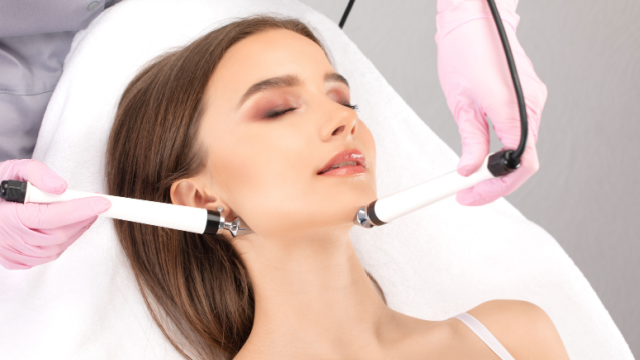
Traditionally, facial contouring relied heavily on a surgeon’s visual judgment during the operation. While effective in experienced hands, this "intuitive" approach often leads to longer operating times and higher rates of revision.
Current Challenges in Standard Approaches:
- Recovery Lag: Without precise planning, soft tissue trauma is often higher, leading to significant swelling that can last 3–6 months.
- Risk of Over-Correction: "Dog-ear" deformities or over-resected jawlines occur when surgeons lack a 3D blueprint of the bone's internal structure.
- Predictability Issues: Patients often struggle to visualize how a bone-level change will impact their soft-tissue profile (skin, fat, and muscle).
| Feature | Standard Manual Contouring | 3D Imaging & AI-Guided Planning |
|---|---|---|
| Surgical Blueprint | 2D X-ray & Visual Judgment | 3D CT Scan & Digital Simulation |
| Nerve Safety | Estimated based on averages | Real-time mapping of nerve pathways |
| Symmetry Control | Manual measurement | AI-driven 3D symmetry analysis |
| Operating Time | 3–4 Hours | 1.5–2.5 Hours (due to pre-planning) |
| Recovery Period | 4–8 Weeks (Intense swelling) | 2–4 Weeks (Targeted intervention) |
The Power of AI-Assisted Planning: How it Reshapes Treatment Pathways
At the core of the modern Korean approach is AI-assisted planning. This involves scanning the patient’s facial architecture and using specialized software to simulate the surgical result before the first incision is ever made.
Why AI-Assisted Planning is the New Gold Standard:
- Mechanism: The software creates a virtual 3D model. Surgeons can "virtually resect" bone to see the exact millimetric impact on facial harmony.
- Minimally Invasive Logic: By knowing the exact "safe zone" for bone reduction, surgeons can use smaller, intra-oral incisions. This limits blood loss and preserves the periosteum (the thin layer of tissue covering the bone), which is critical for faster healing.
- Functional Integration: For patients with structural pain or masticatory (chewing) issues, the software helps align the jaw for optimal function, not just appearance.
Is AI-Assisted Facial Contouring in Korea worth the cost?
Yes. While advanced imaging may add a marginal upfront diagnostic fee, it significantly reduces the long-term "hidden costs" of surgical revisions, nerve damage treatments, and extended time off work. Most patients see a return to daily activities 30–50% faster than with traditional methods.
Local Korea Insights: High Expectations and High-Tech Care
Korean patients are notoriously discerning, prioritizing minimal downtime and natural-looking results. This cultural demand has forced the local industry to innovate faster than almost any other market.
Regulatory frameworks like the Act on the Safety of Regenerative Medicine and the mandatory installation of Operating Room CCTV in many Seoul clinics have increased transparency. Patients today don't just ask "how much will it cost?" but "can I see my 3D nerve map?" This shift towards medical literacy is what makes the Korean ecosystem uniquely suited for tech-driven facial care.
Where Sinsang Plastic Surgery Fits in Facial Contouring in Korea

Sinsang Plastic and Reconstructive Surgery specializes in the intersection of high-precision technology and bespoke aesthetic design. Led by board-certified specialists with decades of experience at top-tier institutions like Samsung Seoul Hospital, the clinic moves beyond generic "V-line" packages.
Key Clinical Pillars at Sinsang:
- Bespoke 1:1 Mapping: Every patient undergoes a 3D CT and ultrasound analysis to determine the exact fat-to-bone ratio before any surgical recommendation.
- Transparent Safety Protocols: Utilizing in-house anesthesiologists and real-time monitoring to ensure patient stability during complex bone reshaping.
- Integrated Aftercare: The clinic uses FDA-approved collagen stimulation and lymphatic care to manage swelling, aligning with the "fast recovery" expectations of both local and international patients.
Conclusion
The prevalence of structural facial concerns and the growing demand for aesthetic refinement in Korea have made advanced diagnostics a necessity, not a luxury. While conventional care relies on manual skill alone, the integration of 3D imaging and AI-assisted planning offers a safer, more predictable treatment ladder.
By reducing surgical variables and focusing on the underlying anatomical data, modern protocols may help patients achieve permanent structural balance with significantly lower risk. Patients considering AI-assisted planning or facial contouring in Korea can schedule a consultation at Sinsang Plastic Surgery to discuss whether this data-driven approach is suitable for their specific anatomy and aesthetic goals.
Clinical Guidance & Recovery Considerations
All surgical and non-surgical treatments carry potential risks such as temporary swelling, bruising, asymmetry, or infection depending on individual anatomy. Detailed indications and personalized recovery expectations are confirmed during in-person ultrasonic evaluation with a Sinsang board-certified specialist.
Patient Concierge
Gangnam Station / Sinsa Area · 150 Dosan-daero 5F–6F, Seoul
Mon–Thu 10:00–19:00 · Fri 10:00–21:00 · Sat 10:00–17:00
Online Inquiry Form →WhatsApp (+1 201-940-3238)LINE (@853akazy)CONTINUE EXPLORING
More Medical Insights

Rising Demand for Double Chin Revision Surgery: Korean Market Price Trends
Rising Demand for Double Chin Revision Surgery: Korean Market Price Trends
Explore →

What is fat grafting - Procedure, Uses, Types, Benefits, and Risks
What is fat grafting - Procedure, Uses, Types, Benefits, and Risks
Explore →

Why 9,000 Global Patients Chose Seoul for Specialized Neck Contouring Surgery
Why 9,000 Global Patients Chose Seoul for Specialized Neck Contouring Surgery
Explore →
INTERNATIONAL CONCIERGE · GANGNAM, SEOUL
Begin Your Personalized Surgical Plan With Sinsang Specialists
Share your goals online or connect directly via our official WhatsApp or LINE concierge for pre-travel assessment and scheduling.